

Hogarth. 2025. 651 pages.
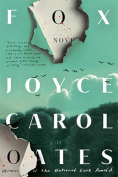
Fox’s plot follows a structure familiar to mystery readers: a body is found; there’s an investigation to determine the victim’s identity; a jump back in time to the life of a character (probably the victim) moving forward to the death; and a continuing investigation into its cause. Although the body is unrecognizable, ravaged by animals, it seems to be the remains of a popular teacher of mid-high students at an exclusive private school in south New Jersey. He is missing, and his car was found nearby. He is (or was) dynamic: students loved him, and he loved certain students. Little Kittens, he called them, when he took liberties in his office. A context of possible motives is thus established. Homicide seems likely.
Early in Francis Fox’s brief career at the school, he disagrees with a librarian who, to keep up appearances, he’s been dating. Should high schoolers read or be assigned Lolita? Granted, it’s deemed a classic and has a wonderful style, but Fox says no, vigorously. Unlike Nabokov, Oates prefers somewhat gothic effects, putting the reader uncomfortably close to victims’ and predators’ perspectives: French kissing sensed by a slightly drugged twelve-year-old, Fox’s manipulations as a teacher, mature women who imagine they are his soul mates. The gothic initially rears as a miasmic swampland, including an unregulated dump that emanates a toxic haze. Vultures in the distance, a car, and the body complete the setting. It becomes an atmospheric backdrop to a small southern Jersey town. At the center of the action is an exclusive private school, with both residential and town students. The gothic effects continue through point of view, through the consciousness of various characters. Indeed, the preteen girls, deluded in their first love, seem scarier than Fox, their pedophile teacher.
Fox may glory in his officially changed name, his wiliness in controlling his classes and selected “Little Kittens.” But it’s the Kittens and other smitten girls drawn to him who create risks. Fox may think he’s in control, the puppet master using behavioral techniques to mold his students, but the most affected are not to be contained in his imagined Skinner box. Put all your feelings in this journal, he urges the selected few. Don’t show it to anyone. But the reader has access, sees the girls’ unbridled thoughts and actions, and finally reads a long section of one journal. After recoiling from maudlin poetry, self-mutilation, and heated prose, one suspects the girls will be marked for life.
W. M. Hagen
Oklahoma Baptist University