
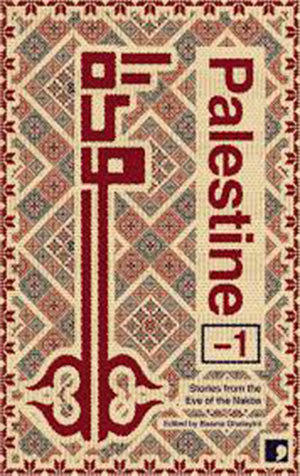
Comma Press. 2026. 256 pages.
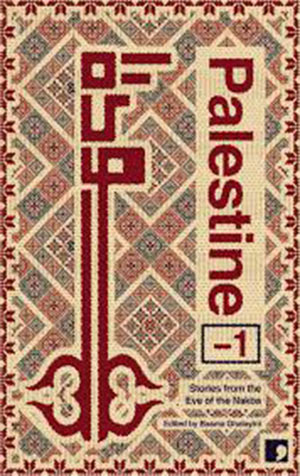
The pen is the ark of humanity, bearing truths that even the fiercest tyrants cannot drown. The Palestinian Nakba of 1948 uprooted over 750,000 innocent Palestinians from their homes, erased villages, and violently interrupted a people’s normal life and memory. Palestine – 1 (Palestine Minus One) returns to that eve, giving voice to the voiceless and insisting that these stories endure.
Edited by Basma Ghalayini, Palestine – 1 is a powerful, haunting, and beautifully curated collection that brings together some of the most compelling Palestinian and allied literary voices to confront the moments just before the Nakba reshaped Palestine’s existence. These stories do not simply revisit history; they reclaim it—reanimating erased places, silenced voices, and interrupted lives with urgency, imagination, and moral clarity. Ghalayini’s deft editorial hand ensures the collection’s twelve stories cohere into a chorus of remembrance, resistance, and literary precision.
Yara El-Ghadban opens the collection with “The Forest of Saffouryeh,” a lyrical and devastating act of remembrance. Writing with poetic ferocity, El-Ghadban gives voice to a village buried beneath pine trees planted to conceal a crime. Her prose transforms land into a speaking witness, exposing how nature itself is conscripted into erasure and creating an unforgettable meditation on memory, violence, and survival.
In “Ismail al-Lyddawi,” Ibtisam Azem delivers a deeply intimate and harrowing narrative rooted in childhood friendship and loss during the massacre of al-Lydd. Azem’s restrained yet emotionally devastating storytelling captures the moment when innocence is irrevocably stripped away and silence becomes a lifelong wound, giving the story both humanity and moral weight.
Ahmed Jaber’s “The Sleepless Spring” explores exile and psychological fracture, portraying characters suspended between past and present, memory and survival. Jaber captures the quiet, persistent ache of displacement, showing how loss reverberates through daily life and alters the very rhythm of existence, making ordinary moments tremble with the weight of uprooted histories. Lina Meruane’s “Al-Shataat” shifts the focus to the diaspora, a dreamlike meditation on dislocation, capturing exile’s vast, haunting reach through lyrical, stream-of-consciousness prose. Together with Jaber, these stories trace the emotional and geographic echoes of uprooting.
Anwar Hamed’s “Trapped” moves boldly into speculative territory, weaving time travel and historical recurrence to show how Palestinian suffering echoes across generations. Hamed’s inventive structure underscores the inescapability of trauma while asserting the continuity of Palestinian presence and endurance, making the story conceptually daring and emotionally resonant.
Selma Dabbagh’s “Katamon” is sharp, political, and deeply unsettling. Set in Jerusalem, the story exposes the mechanics of dispossession and moral hypocrisy with chilling precision, revealing how ideology masks brutality and how historical narratives manipulate violence and erasure.
Mazen Maarouf’s “A Chronicle of Grandad’s Last Days Asleep” blends surrealism and tenderness, portraying displacement through the eyes of a child who becomes a ghost in his own home. With his signature dark humor and dreamlike imagery, Maarouf transforms grief into something strangely luminous, capturing how children navigate loss in impossible circumstances.
Mahmoud Shukair’s “My Mother in Changing Times” brings his masterful realism and deep compassion to the fore. Shukair portrays social transformation through intimate family dynamics, showing how political upheaval reshapes everyday life, allowing ordinary moments to carry extraordinary historical weight.
Sonia Sulaiman’s “The Dragon” examines identity and rupture through allegory, depicting trauma that festers within the child’s soul and transforms innocence into uneasy wisdom, rendered with deceptively calm, fablelike prose.
Abdalmuti Maqboul’s “Eastwards” cleverly employs the superhero genre to indict global complicity, particularly Western power, in Palestinian suffering, stretching form to illuminate memory, endurance, and the resilience of a people who refuse to be erased.
Liana Badr’s “I Swear, All This Happened” stands out as a poignant reflection on girlhood, memory, and myth, grounding political rupture in lived experience and highlighting the human cost of displacement. Badr’s prose delicately interweaves personal and collective histories, showing how individual memory becomes a vessel for the enduring presence of Palestine, where every small act of remembrance resists erasure.
The collection closes with G. Abraham’s “Flood,” a stark and symbolic reckoning that lingers long after the final page, fusing surrealism, history, and contemporary echoes of Palestinian struggle into a devastating finale.
Together, these voices form a chorus of remembrance and resistance. Palestine – 1 is not only a major literary achievement but an act of defiance against erasure—a book that insists on truth, dignity, and the enduring presence of Palestine in story, language, and imagination.
(Editorial note: Shereen Malherbe’s interview with Liana Badr appears in this same issue. Her interview with Mahmoud Shukair appeared in WLT’s November 2024 issue.)
Yousef Khanfar
Edmond, Oklahoma