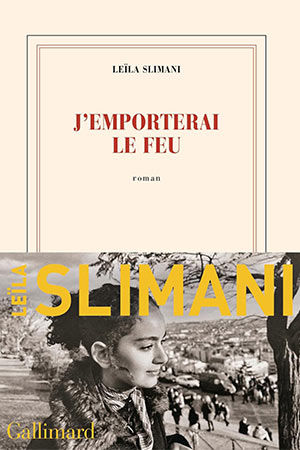

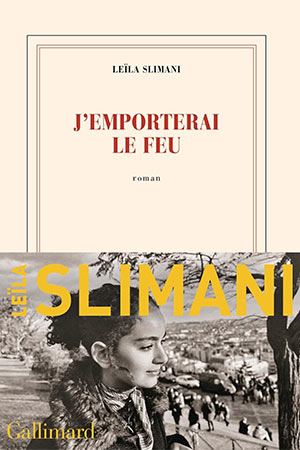
Gallimard. 2025. 432 pages.
This novel concludes the author’s trilogy, Le pays des autres, based on her family history in Morocco and France since the end of the Second World War (for reviews of the first two novels, see WLT, Autumn 2020 and Nov. 2022).
In J’emporterai le feu (I will take the fire with me), the third generation of the relatively prosperous Belhaj family takes center stage. Mia and Inès, the daughters of Aïcha (a successful gynecologist) and Mehdi (a high-ranking technocrat within the Ministry of Industry), were born in the 1980s. Much like their mother, Aïcha, and their French grandmother Mathilde, Mia and Inès seek some degree of freedom and autonomy in a society largely dominated by Islamic religious traditions and rigidly divided along social class lines. Since the number of characters in this multigenerational family saga has continued to increase, an explanatory index of the older and newer characters is included as a prefatory section of J’emporterai le feu (as was the case in the second novel).
The storyline begins with Mia’s description of the period of severe depression she went through in 2021. She was already living in Paris and working as a writer. The reader will later find out that her depression is partly linked to her father’s sudden imprisonment and lasting disgrace in Morocco, where he had incurred the displeasure of King Hassan II during what is known to this day as les années de plomb (the “years of lead” that designate three decades of harsh political repression). While the father was rehabilitated several years after his death, in a manner reminiscent of Soviet practices, that late acknowledgment brought little comfort to the daughter.
As the character who most resembles the author, Mia is the main narrative voice of the final novel and perhaps the conscience of the overall trilogy. In an “interlude” set in 2022, her brief trip to Morocco and her visit to what was once the family farm, long after the deaths of her grandparents, give Mia a mournful opportunity to reflect on the hopes, failures, and destinies of the family members who preceded and influenced her.
The experiences of the older generations of the Belhaj family are also depicted, with plot twists that reflect both changing times and the slow evolution of sociocultural patterns. Aïcha’s younger brother Selim is now living as a somewhat Bohemian photographic artist in New York, a way of life and a profession that his parents, Mathilde and Amine, who at this juncture still run a profitable farm back home, do not understand when they go visit him. Amine will vainly attempt to convince his son to move back to Morocco in order to take over management of the farm. Meanwhile, in a darkly comic moment, Mathilde and Amine remain frightened of even whispering any criticism of Hassan II while they are traveling abroad.
Leïla Slimani has been a well-known writer since she won France’s most prestigious annual literary award, the Goncourt Prize, in 2016 for her second novel, Chanson douce (see WLT, May 2017). The richly textured conclusion of her trilogy is one of her best works thus far.
Edward Ousselin
Western Washington University