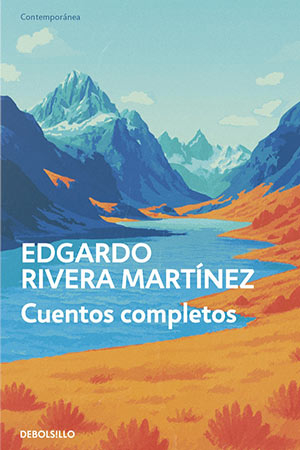

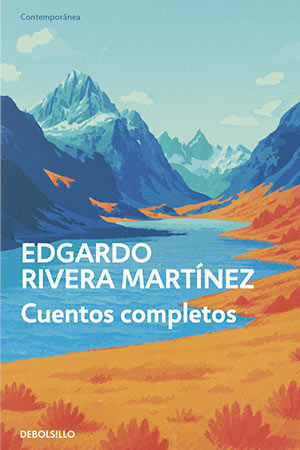
Debolsillo. 2025. 555 pages.
Edgardo Rivera Martínez (1933–2018) is an important figure in the development of the contemporary short story in Peruvian and Latin American letters. With the publication in 1993 of his first novel, País de Jauja, he put the Andean town where he was born and raised, Jauja, on the Peruvian literary map. The novel is a noteworthy contribution to Peruvian literature because it imagines a dialogue between the Andean and Occidental identities of Peru. As such, it leaves us with a symbolic portrayal of mestizaje, or ethnoracial mixing, in the space of a small Andean town. To convey a melding of cultures that is harmonious, Rivera Martínez incorporates magical and mythical elements in his texts, while his protagonist, Claudio Alaya, explores his identities and engages in introspective meditations.
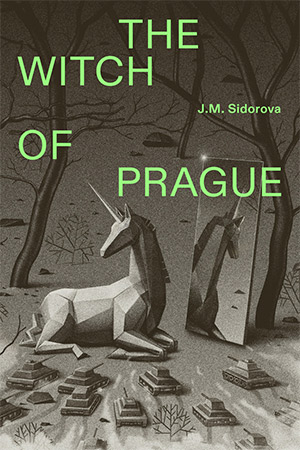
In 1957 Rivera Martínez published “El unicornio,” a story about a schoolteacher and his pupil who discover a mythical animal in their town. This is the first story in which the author explores coexisting Andean and European myths in his fiction, a theme that runs through much of his short fiction and his novels. Rivera Martínez’s stories also portray specific character types, one of which is the fallen angel who searches for his identity and history. The most emblematic of this character type appears in “Ángel de Ocongate,” one of Rivera Martínez’s masterpieces. The angel is dressed in strange attire with Andean and European flourishes. He travels the Andes by foot, searching for his history and the cause of his exile to the countryside. The errant figure in Rivera Martínez’s work often represents a broader search for a pluricultural Peruvian identity.
Other stories, such as “Una flor en la plaza de la Buena Muerte” and “Historia de Cifar y de Camilo,” take place in Lima, Peru. The former narrates the mysterious death of the story’s protagonist, José María, in the plaza of a historic church. “Historia de Cifar y de Camilo” shines a light on a unique friendship between a boy and a Persian cat, while also delineating a commentary on class relations in stratified Peruvian society.
Artists are a key figure as well, as in “El fierrero,” in which we follow an Andean migrant who moves to Lima to make a life for himself and his family. Although desperately poor, he dedicates himself to a large-scale project admired by onlookers. “Danzantes de la noche y de la muerte” portrays a troupe of festival dancers who perform during feast days in Andean towns. Yet we discover that there are deeper ties linking these dancers to their craft and to one another, ties that bind them in life and death.
Beyond these themes, Rivera Martínez showcases his rigorous, elegant style. This new edition of Cuentos completos reaffirms Rivera Martínez as a master of his craft, reminding readers of his subtle yet powerful influence on the evolution of the contemporary Latin American short story. Further still, this edition recalls Rivera Martínez’s mark on contemporary Latin American literature more broadly. (Editorial note: Read Amy Olen’s translation of Rivera Martínez’s “Isadora Cónsac.”)
César Ferreira
University of Wisconsin–Milwaukee