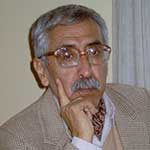

The publication this week of Marayrasu: Stories, by Peruvian author Edgardo Rivera Martínez, translated by Amy Olen, marks the first English-language collection of short stories by the Peruvian master. The following story is excerpted from the book.
Isadora Cónsac was an old woman by then, and she was all alone. Her husband, Casimiro Alaya, had died years before, and her brother, widowed like she was, had passed away as well. No, she didn’t have kids, or any godchildren either. And so, over time, she ended up alone, and alone she faced old age, and she took care of her little house and the two plots of land her father had left her. But she wasn’t afraid or unhappy, nor was she overcome with sadness. You could say that she had accepted her fate. No doubt that’s why, in the evenings, she would often sit on her patio bench and knit, yet before long she would stop, and she would sit thoughtfully, looking at the sky.
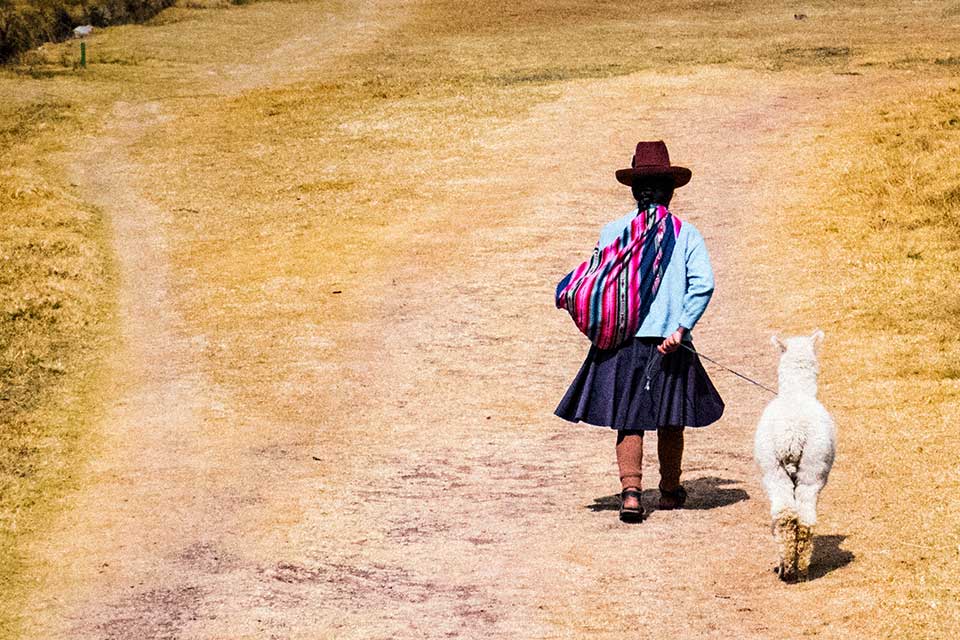
That’s how she was, and she hardly visited the few distant relatives she had. And, in spite of other people’s advice, she wasn’t about to give up her journeys to Pachacayo, Huari, and La Oroya, which she made once or twice a month. They were tiring trips because she traveled on foot while carrying a large bundle on her back.
“Those towns are so far away, you shouldn’t be going there anymore,” her friend Casilda would say to her. “Isadora, you shouldn’t. Can’t you get by on your corn and potatoes? Didn’t Casimiro leave anything to you?”
Isadora listened and responded that no, she was used to it by now, and putting an end to her journeys wasn’t an option. And because all she had was her little old house and the dismal harvest from her plots of land, she was, indeed, quite poor.
“Is this little business of yours worth it, mamay?” her neighbor wanted to know. “Do you make any money selling those little pitchers and toys in the mining towns?”
“Yes, I make a little money,” she responded. Because the very purpose of her travels was to go to the markets of these towns and sell the little ceramic figurines that the potters Jacinto Oluarte and Timoteo Suri made in Aco and Aramachay. Every so often, they would visit and give her a good price for the small, brightly colored, lightly glazed ceramic bulls, chickens, and lambs they crafted out of plaster. They were like the figurines she played with when she was young. And for years, ever since her husband died and she was alone, she traveled to sell these toys during the dry months, when it wasn’t raining and she didn’t have to worry about icy conditions. Times were tough and the land produced very little, and she hardly had enough to get by. But she was a brave woman, and she had learned her trade from Ms. Flora, who was older than Isadora and had passed away. While at first Isadora had a young woman named Marcela join her on her trips, she later traveled alone. To save money, she didn’t go by train or bus. Rather she walked, going through Marco and Acaya, because she could earn a little more that way. For that and other reasons, Isadora continued making these journeys.
For years, ever since her husband died and she was alone, Isadora traveled to sell these toys during the dry months, when it wasn’t raining and she didn’t have to worry about icy conditions.
And so, she carried on and was able to improve her living situation, but not very much, and not enough to justify her solitary treks. That’s why folks said, “Looks like Isadora Cónsac likes walking around like that. She comes and goes and isn’t afraid of storms or ice.” And truly, she wasn’t afraid, and she didn’t get scared of foxes or tucus in the ravines or condors on the high plains. She would pack her goods in her wishcata, and put cancha, cheese, coca leaves, and a little bottle of water in her bag. In a little knapsack, she packed a small, lightweight burner and a bit of kerosene in case she ended up having to spend the night out in the wilderness. And so, she would leave town, walking along in that way of hers, as if her feet barely touched the ground. She continued doing this work, despite beginning to feel very tired halfway through her walks. “It will pass,” she told herself. She had grown to love those journeys so much! But her fatigue didn’t subside, and she had to walk shorter stretches at a time and take longer breaks.
And that’s how it was until one afternoon when, on her way to Hauri, she felt a pain in her chest. So she sat down at the foot of some boulders, took out her little bag of coca leaves, and started chewing them. But the pain didn’t go away, and instead it seemed to grow stronger. She didn’t give in to her fear, and after a while she opened the knapsack at her side. She began taking out the little figurines, and she set them out in front of her like she used to do when she was a little girl. No, that pain didn’t go away, but with effort and in a quiet voice, she started to sing a huaynito that was popular when she was young, with lyrics that went like this: “From that black mountain / the fog lowers near / from your beautiful eyes / a glassy tear.” And afterward: “On this side / and the other side / of the Mantaro River / my little dove / flew away.” And so, as she sang, it was as if the toys were joyful little candles in the falling night. And like that, little by little, she was carried off in a slow and happy death . . .
2017
Translation from the Spanish
Editorial note: From Marayrasu: Stories, by Edgardo Rivera Martínez (Curbstone Books / Northwestern University Press, 2026). Copyright © 2017 by the author. English-language copyright © 2026 by Northwestern University Press. Published by permission of the translator.