
Light and Melody, published in Korea in 2024, combines The Diary of Anne Frank’s intimacy of the everyday amid violence with Winter in Sokcho’s dislocated protagonist yearning for identity in foreign countries. In an interview just before the announcement that Han Kang had won the Nobel Prize, she identified Light and Melody as one of the modern Korean novels she had recently read. As a result, sales of this novel increased 139 percent in just one week on YES24, a Korean online bookstore.
A little plot to set the stage: In elementary school, Eun was abandoned by her mother and ignored by her father. Her classmate, Seung-Jun, learns of her plight and brings her food and clothes. One day, he gives her his father’s Fuji camera, opening up a future for Eun. The novel shows how Seung-Jun’s kindness grows in force and impact across the globe even as characters face dilemmas about survival, being on the right or wrong side of history, and fear.
November 26, 2022
Eun closed her laptop. She decided to take a break from editing the image of Colin Anderson, Anna’s father. Eun had taken this photo of Colin just a few days before he’d passed away. Eun could finish it tonight if she pushed herself but wanted to slow down for the next two weeks, while she was in England for Salma’s wedding.
The clatter of teacups and a teapot downstairs, followed by the clanging of teaspoons hitting a plate or tray, signaled that Anna was making some tea with honey and brandy for herself and the chamomile tea that Eun liked. She realized just then that afternoon tea was delayed until evening because they had spent the afternoon shopping for Salma’s wedding present.
Eun had brought Anna and Salma together. Salma was fifteen when Anna invited her to London. Salma had lived in this exact room until three summers ago, then went to college and got her dream job at a nongovernmental organization dealing with children’s issues. During that time, Salma was also granted permanent residency. Her future once seemed to hold nothing but insecurity in a refugee camp on Lesbos, but now she was a grown woman living in London who, in two weeks, would marry a man she met at the NGO. Then again, seven years ago, Eun never would have predicted that she also would be back in London, waiting for tea at Anna’s house in Dulwich.
Hard to believe that six months had passed since Eun had rolled her twenty-eight-inch suitcase out of the train station in the middle of the forest, past the garden bursting with pale-green life—ficus trees, hydrangeas, sage, roses, tulips—and stepped through Anna’s wide-open, sky-blue front door. Her two-story redbrick home was cozier and fancier than anywhere Eun had ever stayed during photography assignments, let alone any home she’d ever lived in. It was, more than anything, a welcoming space, one that gave her a sense of security, like a bird sheltering in a nest to avoid a driving rain. The antique wooden furniture and knickknacks, the soft light glowing from the elegant light fixtures, the four bedrooms and living room decorated in light-yellow wallpaper, they all seemed intended to foster that sense of security.
“Tea’s ready, Silver!” Anna called from downstairs. “Take your time.”
“Coming!” Eun grabbed her shawl from the back of the chair.
Eun was editing a photo of Colin, but it was actually Gary Anderson, Anna’s brother, who had opened her eyes to the world of photojournalism. Gary had died at sixty-one from lung cancer and, though they had never met, Eun had written an article about his influence on her for an English-language Korean newspaper. The two women first exchanged emails several months afterward, when Anna was searching Gary’s name on the internet in order to compile material for a retrospective exhibit of his photographs and came across Eun’s article. Back in the autumn of 2013, when she eagerly read Anna’s email, Eun didn’t know that they would stay in touch over the years. Or that this English woman would become a good friend who affectionately called her “Silver,” her name translated into English, or that Anna would also offer Salma space to breathe and even to work . . .
After losing part of her left leg, Eun could no longer move easily around conflict zones, taking pictures. Maintaining her balance with a prosthetic leg was just barely possible, and walking quickly or running was impossible. Because of the pain. Neither physical therapy nor a new prosthetic leg kept the pain from spiking the moment she tried to move quickly. In dangerous places, where crises could break out without warning, a photographer who couldn’t control her own body was beyond useless. She could become a ticking time bomb that imperiled others. Then again, maybe her leg was just an excuse. The sound of bombers, explosives, and guns terrified her now. As did loud airplanes and motorcycles, or anything that could possibly shatter, like windows, mirrors, and fluorescent ceiling lights. She was afraid of coming upon a construction site, taking the long way around to avoid it, then crumbling at a car honk or ambulance siren; she was afraid of militias and insurgents, who would be unwelcoming to people like her; she was afraid of producers and reporters sent to television stations and newspapers, and workers posted to international organizations or relief agencies.
She stopped working, barely earning anything from sporadic royalties or sales of her photographs. Once in a while, she was asked to take commercial photographs, but she had no desire and, frankly, no confidence. She worked about six months or a year taking and editing pictures for ID cards at a studio run by someone from her high school, but the pay was hardly anything. Just when she thought about escaping, when that secret desire to quietly vanish germinated, just as it had in the freezing room of her childhood, Anna had offered her this job, even paying for her airfare and providing a room in her home.
A short video to commemorate Colin’s life . . .
That one line was how Anna had outlined the project. The video was supposed to contain interviews with Colin and anecdotes about him from fellow British Royal Flying Corps members. Colin, who had Parkinson’s and dementia, passed away in a nursing home when he was almost one hundred, three months after Eun arrived in England. Even so, she thought to herself after Colin’s funeral, she had those three months to fill her camera with images of him at moments when he had some clarity. And maybe dementia wasn’t totally unlucky for Colin. He passed away waiting for Gary to visit, not remembering his son had died nine years previously, and Eun believed that small island of memory loss was a sanctuary from the worst possible anguish. The video was scheduled to play next July at a Dulwich art museum during a tenth-anniversary Gary Anderson retrospective: his photographs of conflict zones; pictures published in newspapers and magazines; notes he took about his photographs; letters he’d sent to Anna and some friends and their replies. As for making a separate video about Colin, it was because their father was a consequential influence on her brother’s life, Anna explained. And she couldn’t ignore that that influence was expressed in their falling out. Colin had been one of the English pilots who firebombed Dresden, while Gary had used his photos in conflict zones to campaign against war, so their breach was inevitable.
Eun believed that small island of memory loss was a sanctuary from the worst possible anguish.
Eun immediately saved her edited file onto an external hard drive and went downstairs. Anna had set the table with teacups and a plate of cookies, then plopped down on the beige sofa where, unusually for her, she was dozing, her head dropped low. Anna turned sixty-four that year. She had various health issues and was relatively frail. On top of all that, every five years, she’d lost her mother, her brother, her husband, and her father one after the other. Grief had shrunk her. Eun walked toward the closet for a blanket to cover Anna with when she happened to glance out the window and stopped in her tracks.
It was snowing.
As if tugged by an invisible string, Eun headed to the window and undid the latch at the top. Snowflakes were sucked in through the inverted triangle opening, and a blustery wind muffled the metallic sound made when it knocked against the old window sash. Her first snowfall in England. A travel book she’d read described London as a city where snow rarely fell. She thought about the message Seung-Jun had sent, that it was snowing in Seoul, and it reminded him of her. Seoul was nine hours ahead of London, so the sky he gazed at last night would have already moved into the future, but she wondered if the snowflakes he’d seen could have traveled back in time and arrived here. While the sky rotated inside this huge dome called Earth, transcending time, and the clouds floated around, ignoring borders, the transformation of ice particles inside the clouds into snowflakes must follow the rules of nature, wherever they may be, so it would be safe to assume that the snow coming down in Seoul last night and the snow falling today in London are, in the end, the same.
Over the years, Eun had always assumed she’d see him again.
Seven years ago, when she was injured in Syria and returned to Korea for surgery, he’d visited her in the hospital. She was getting out of bed, totally confused, and came face to face with him. He greeted her awkwardly, not quite able to refrain from furtively glancing at the hospital gown swaying in the emptiness below the knee of her left leg. She had never forgotten that glance, which seemed to say, “Poor, unlucky you.” Maybe, she acknowledged to herself, she hadn’t responded to his message yet because she wanted to avoid any chance of a reunion.
“Maybe . . . ,” Eun murmured, shutting the window.
The chilly living room cooled her cheeks. She was used to the cold, had to be. Ever since the cold, dirty room she lived in as a kid. Even so, whenever she was cold, depressing thoughts encroached, now as when she was young. Maybe she started taking pictures because she hated and was afraid of the cold. Since light gathered when she took pictures. At least she wasn’t cold during the moments she pressed the shutter, when the light in normally hard-to-see places, like under the roof, behind a dresser, or inside an empty bottle, suddenly jumped out and wrapped around the subject. From the first time she touched the camera, she was hooked.
From the first time she touched the camera, she was hooked.
“Do you still have that camera?” Seung-Jun had asked in her hospital room.
He had interviewed her in Ilsan in January but hadn’t recognized her and he’d come to see her at the hospital in November, so that question meant that, in the meantime, he had remembered the twelve-year-old her and reconstructed in his mind the room where she’d been consumed by hunger and loneliness as a child.
He had given her so much more than a camera.
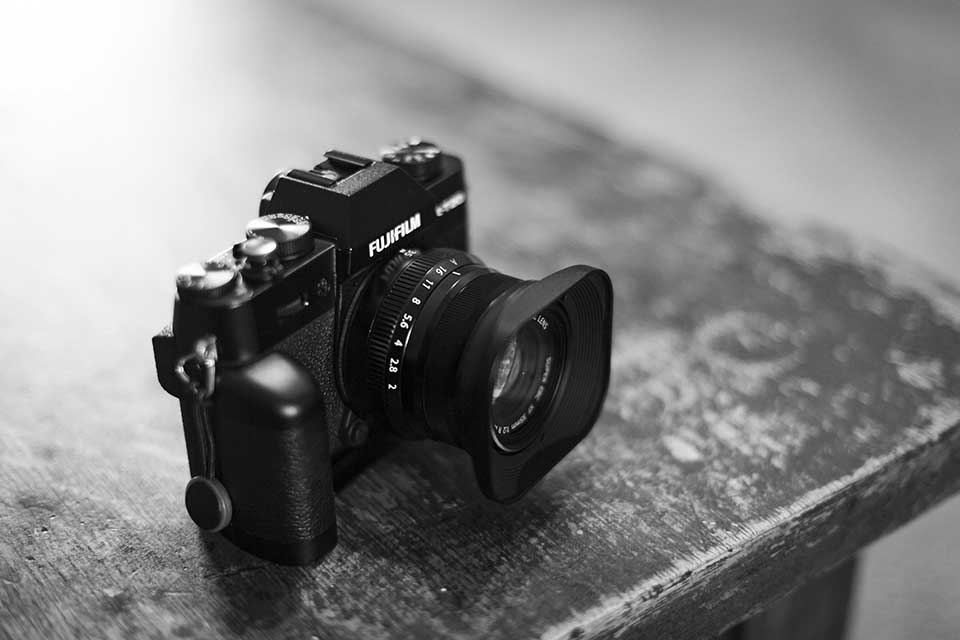
Summer vacation was over, a new semester had started, but she was often absent. One day, her mother had said, “I’ll be back to pick you up,” but hadn’t been in contact for five years. Her father stayed away from home longer and longer. And it kept getting harder and harder to wash, put on clean clothes, pack her book bag, and go to school every morning. As the class president, Seung-Jun had to go to her home to check on her. That was before cell phones were widely available, and her home didn’t even have a landline. She thought that one visit would be it, but he kept coming back, bringing something with him each time. Sometimes it was well-worn school supplies; sometimes it was a notebook with his class notes; once he even gave her batteries for her snow globe and a wool blanket that he seemed to have spent all his allowance on. One day he brought a plastic bag of rice, a half-used tube of toothpaste, and some ramen, and she assumed he’d snuck those out of his house. The autumn rain had been falling for two days straight, and the day it stopped he brought a Fuji semi-automatic film camera his dad had gotten in Japan.
Eun untied the leather case, revealing the camera. It didn’t feel cold and had a rough, interesting heft to it. After Seung-Jun left, she took a couple of pictures around her room and figured out the timer, shutter, and lever. Thinking over and over, I’m not cold, it’s so weird how I’m not cold at all . . . It took a lot longer to learn how to replace the film and batteries, or understand the fundamentals of light exposure and sensitivity, how to control shutter speed, or make the best use of angles and focus, but it didn’t matter that she didn’t know. With camera in hand, she started venturing outside little by little. She took pictures of scenes like an old woman carrying a baby wrapped in a podaegi on her back; kids playing the gomujul game in front of a graffitied wall; a puppy basking in the sun; a house’s cracked window. Through the hole of a bug-eaten leaf, she photographed a vapor trail breaking up in the sky. And a perfectly symmetrical spiderweb and the little spider gazing out at its realm from the end of a thread. She rummaged through all of her dad’s clothes until she found some money, went to a photo shop to get her pictures developed, and finally learned how to put in new film. She packed the camera in her book bag and returned to school a month after the semester had started. She needed lots more shots. She also wanted to send Seung-Jun a silent message that he didn’t have to come to her house anymore.
That’s probably why he asked.
“Of course, I still have it.” In her lonely hospital room, remembering her past with that camera, she didn’t realize she was choking up.
Whenever she imagined having to pack a tiny bag and flee to a shelter because of a house fire or natural disaster, the first thing she always grabbed was this camera.
The camera he’d given her was in her bag on the day she left her home for an orphanage in Suwon, the day she aged out of the orphanage into a series of shabby rooms, and the day she took her first flight for a photo assignment. Even after she got new cameras, even after she was told at a repair shop that the mechanisms in the shutter box weren’t working and getting components for such an old model wouldn’t be easy, she didn’t throw it away, never even considered throwing it away. In fact, whenever she imagined having to pack a tiny bag and flee to a shelter because of a house fire or natural disaster, the first thing she always grabbed was this camera.
“Thank you,” Seung-Jun said.
When Eun responded, “Thanks, really,” naturally, without any formality, they laughed awkwardly. They laughed, but she noticed him cast another sideways glance. She impulsively grabbed a piece of scrap paper from the shelf by her bed, jotted down the address of her blog, and handed it to him, which was all she could manage just then. Because the blog contained letters she’d written to him, saying all the things she’d wanted to tell him but never had. That he didn’t have to feel sorry for her, that she’d gone to dangerous places and, ultimately, had been unable to avoid danger and had lost a leg as a result, but that didn’t define her whole life.
When Eun covered Anna’s knees with the blanket, Anna pursed her lips like a baby but didn’t wake up. Anna was the same age as Eun’s mother, but sometimes she felt as if Anna was the daughter. Like now. When Anna woke up, Eun would tell her that a good friend had sent a message. That she’d become someone who knew how to take pictures and videos only because of the camera he’d given her, and she’d kept it close wherever she went. She watched the snow continue to blow outside. She closed her eyes and shrank herself as small as possible, imagining the landscape outside was the size of her window, and coils and gears were installed somewhere beyond that. Just like the snow globe’s gears she always wound up just before going to sleep, so long ago.
Translation from the Korean