
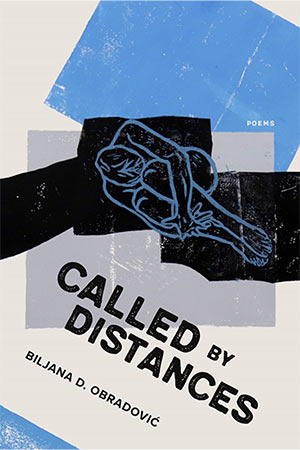
LSU Press. 2026. 100 pages.
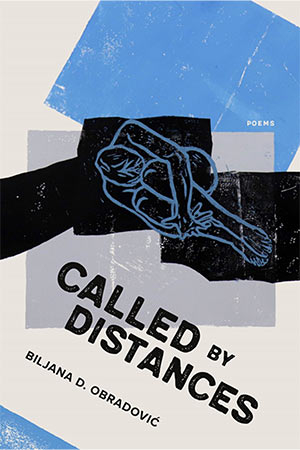
How should a poet organize a collection of forty-three poems? Chronologically, thematically, randomly? Loosely, tightly? Biljana D. Obradović’s new collection from LSU Press could have been organized geographically. There are poems set in New Orleans, where Obradović has lived and taught since the 1990s; poems set in Nebraska and Richmond and aboard a bus traveling up the East Coast; poems set in Serbia, Venice, Greece, and India. But the structure of the book is more thematic, being divided into five sections: Called by the Past, Called by Love & Death, Called by Distances, Called by Names, and Called by Nature. Taken as a whole, reading Called by Distances is like viewing a personal mosaic portrait of the world, each poem giving a glimpse of some meaningful shard.
It is no surprise that a poet who immigrated to the US nearly forty years ago would write about America. “The Tamed West” sketches a portrait of Nebraska via images of the state fair, and “Pen Pals” features a verbal whirlwind tour of Chicago. New Orleans in particular plays a starring role throughout the collection. There are the expected mentions of Mardi Gras and Hurricane Katrina as well as more granular, personal perspectives. “September Broadway Ramblings, New Orleans” wanders through Uptown cafés and markets and ends with Clinton-era news blaring from CNN, for example, capturing a personal experience of the city rather than confirming public perceptions of it.
Some poems are about the poet’s relationship to America, and others are about its relationship to other places. “First Bus Trip through the USA” offers an account of the poet beginning to understand the differences between Europe and the US as she witnesses the arrest of a disruptive passenger and finds the arrest is more disruptive than the man’s expletives. Another facet of American culture surfaces in “An Alternate Journey”: “They must / revel in their gigantic palaces, two-car garages, / bright, huge BMW SUVs . . . they pile on / dollars and pounds, always counting.” In “Wearing Black,” the poet grieves for her mother, troubled by how Serbian mourning traditions feel out of place in America: “should I wear black for death? / I don’t know the rules here.” “Assimilation: How He Changed Her European Ways” traces a series of adjustments, negotiated in a couple’s daily encounters, that immigrants to any culture often make. In this case, it has to do with tapioca pudding, ground beef, and eggs Benedict.
Cancer is a haunting presence in Called by Distances. The collection opens with “Rivers Run through Me,” a harrowing poem about living across from a phosphate factory in Yugoslavia and the demise of the poet’s parents from cancer at age sixty-six (a fact that is mentioned in two other poems). A hairdresser works through her lunch break to keep herself occupied after the death of her niece from cancer in “Walk-in.” The most direct treatment of the disease comes in “All Cancers Are Brutal, But This One Is One of the Worst,” which deals with a friend’s diagnosis of bladder cancer and the struggle to formulate a response to such awful news.
Obradović is an accommodating poet, employing a plainspoken style and eschewing elaborate metaphor. Many poems plainly establish a context at the outset, eliminating opportunities to piece together context clues, as in “Why I Can’t Get Anything Done,” which begins, “While I was at the library, I couldn’t find my keys. / I hoped I hadn’t left them in my Volkswagen car.” A few of the poems close with direct discussion of their themes, as is the case with “Waiting for Papayas,” where the last line is “we all lament, how so much came so soon from so little.” Other poems display a lighter touch. “Waiting for Him,” for example, ends with suggestive images: “stand in the first yellowing of leaves, the winter mist. I beg him. / Open. Smell the spring. Lily-of-the-valley.” And “At the End of the Year in the Subtropics” has an equally delicate conclusion: “my husband hears gunfire from the kitchen, thinks he left the TV on.”
Obradović has been an active translator and editor of Serbian poetry for many years, and Called by Distances is her fifth collection of poetry. Her first was Frozen Embraces (1997), and her most recent before Called by Distances was Little Disruptions (2022). In each collection, she has described the particulars of her own immigrant experience, representing Serbia, speaking for the world beyond US borders, celebrating New Orleans, and being herself.
Angus Woodward
Franciscan Missionaries of Our Lady University