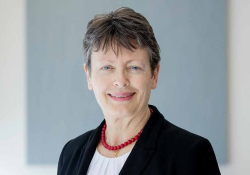


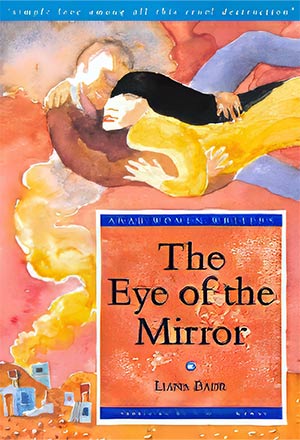
Liana Badr is a renowned Palestinian writer, filmmaker, director, novelist, and poet. She studied at the University of Jordan and Lebanese University, graduating from the Beirut Arab University with a BA in philosophy and psychology. She earned her MA from Birzeit University and in her spare time studied for a BA in English literature. She is the author of one novella, three collections of short stories, six children’s books, a book of interviews, a book of poetry, and four novels, including A Compass for the Sunflower, A Balcony over the Fakihani, and The Eye of the Mirror. She has also written and directed seven films.
I meet with Liana on a Sunday morning in Dubai in a relaxed café in Town Square between her travels. We are meeting after it was announced that she was the 2024 Palestine Prize Foundation Laureate for literature, an incredible and fitting achievement given her work capturing the female Palestinian experience. She is dressed in a vibrant green and enters the room with purpose and energy. What I quickly discover is that Liana Badr tells her life through her stories, through the places and wars that have shaped her life. So, we begin where it all began for Badr, in a childhood immersed in stories.
Shereen Malherbe: When did you discover stories were important?
Liana Badr: In Hebron, Palestine, which was my first home. I was like a baby in three cities. Hebron was my first, where I was raised by aunts who lived with us to help. Hebron is rich with culture and stories. To understand the people in Hebron is to know their lives are stories. If they want to tell you something, they will tell you a story. If they want you do something, they will tell you a story. It was here that I learned my addiction to stories. My life was not about food or drink or play; it was about waiting for these stories to be told. My aunties were putting on blankets when we were young, tying them round our waists as we slept. I feel like this spiritual bondage with the stories comes from them. Being tied together with these stories, I was bound literally and metaphorically to them.
Malherbe: We share links to Jericho, a place both of our families have lived since the Nakba. Tell us more about your childhood there.
Badr: During my childhood, we would spend winters in Jericho. The Jericho of my childhood was a beautiful place. It felt exotic. The color gold reminds me of the city. Its climate was easy and fruit was in abundance there. Many Nakba refugees settled there after 1948, and it was easier for us there. I knew those who had stayed in other areas near Jerusalem, and they didn’t have houses, so they would die of cold and famine in the tents. In this way we were a lot better off than many Nakba refugees. My father was a doctor and opened his first clinic in Jericho. There was also a community of people trying to capture the experience of the Nakba, through art, poetry, and writing.
Malherbe: One of your novels, Jericho Stars, is based in Jericho. Can you tell us how this links to your childhood there?
Badr: My father was also interested in astronomy. He made the first manual telescope in the Middle East. Whenever NASA needed something, they asked him. You see, we were meant to feel like refugees, but this home of ours was the center of my world and it was the center of others. Many nights my house was full, and the neighbors would also come and visit. We were living in this place surrounded by war, but at night we would be staring at the stars and looking at Mars. The Occupation wanted us to feel misery, but we felt important.
Malherbe: Displacement and resilience are themes of your novel. Your life was punctuated by wars and turmoil; how did this influence your work?
Badr: I was surrounded by people who wanted to keep the national soul of Palestine alive. They did not want to accept that they would become poor people in tents. When I was five years old, they had a big meeting and I was bored. I asked them to have some fun, and one of the men gave me a famous Russian book translated into Arabic. It was Maxim Gorky’s Mother. It was a thick book full of words and concepts I didn’t understand.
Malherbe: This text is considered a pioneering work of Russian socialist realism, distinguished by its bleak authenticity and true-to-life style. How did politics affect your childhood?
Badr: The political exposure my parents were a part of led to my mother being expelled from her work and my father being imprisoned. I didn’t know as a young girl where he was. When I saw him one night with the guards, it was past midnight and I asked him, “Where are you going in the middle of the night?” He said, “I am going to play some sport,” with his hands in his pockets. Sports! My father was missing for two years, and we had no income. I became very miserable. So, I was sent to the boarding school in Jerusalem called Dar-Al-Tifel, established by Hind Al-Husseini who had seen the orphans from the Nakba left outside the Old City walls after the massacre at Deir Yassin.
Malherbe: How did this affect you?
Badr: I felt full of the worlds of people. I learned through them how it was to be an orphan, and I wanted to express their suffering. I felt no separation between us. After three years, my mother died and I became a real orphan.
Malherbe: This connection between you and other Palestinian refugees continued even through your time in Beirut as a journalist. Can you tell us about that?
Badr: I was a cultural journalist, well known for my interviews. Beirut was like a garden for activity and culture. In my spare time, I volunteered in Beirut to teach refugees from the massacre in Sabra and Shatila how to read and write. So, every day I would go and teach them. It was a very dangerous life, and I was always worried I would be killed in a raid or a bombardment. But I refused to stop going. It was a rich education for me.
I learned to connect with the people of the 1948 Nakba. I became accustomed to the style of language they spoke, the proverbs they used, and I used this language for my first novel, A Compass for the Sunflower, like an experiment. I felt like no other work or language was capturing their voices and experiences. Men were writing about male experiences, but there was nothing about women. The novel was a huge success, and I didn’t expect this at all.
I learned to connect with the people of the 1948 Nakba—the style of language they spoke, the proverbs they used.
 Malherbe: Congratulations on the success of your debut. Your films follow this trajectory of sharing women’s voices and insights into their lives. Tell us about how and why you decided to transition into film.
Badr: My books were censored and banned in Jordan and Palestine, so the audience didn’t have access to them. This deeply saddened me and was very frustrating. I decided if I wanted my people to see my work, I should make a film. Perhaps more would have access then.
I was deeply passionate about cinema. Growing up in Jerusalem, surrounded by movie theaters and countless films, I lived within different worlds that captured my imagination and heart. I dreamed that one day I would become a movie star. But everything disappeared after I became a refugee in 1967. Our family fell into poverty after losing our home and my father’s clinic. The invaders did not allow us to return to Jericho or Jerusalem. Cinema remained in my life only as an impossible dream.
When I returned to Palestine in 1994, I tried once more to revive that dream. Cinema became my gateway to belonging again, to feeling the deep, secret breath of the land I love.
Malherbe: This was a transition born from necessity?
Badr: Yes. We should struggle to show what is happening inside Palestine and in the lives of Palestinians. I knew the stories of the women, whereas many others did not. I was in a unique position to capture this. I did it out of necessity.
Each film I made was a different dream, moving toward the other. Through filmmaking, I fought the loneliness and frustration that had followed me since becoming a refugee. I entered the world of film to discover new realities and to find myself. I worked freely, without compensation. Making independent films was never easy, but it felt like giving birth to my own being, healing through the search for questions and answers.
My films became like a tapestry, woven with new colors and patterns. They helped me rediscover the knowledge of love for the world, because through them I became once more a free person—one who creates images, colors, and meaning as a human being, not merely as a refugee.
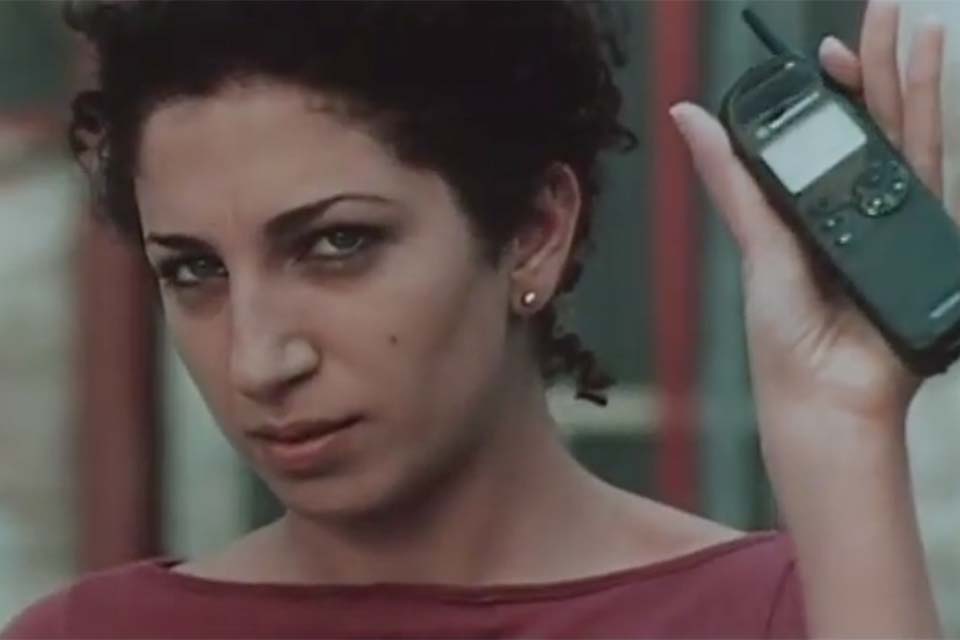
Liana Badr’s writing radiates a rare beauty and emotional force, weaving art and resistance into stories that leave a lasting imprint on the heart. —Yousef Khanfar, Founder of the Palestine Prize Foundation
Malherbe: This bravery and passion stem from somewhere. Can you share your philosophy?
Badr:My mother raised five girls and told us we can be as good if not better than boys. We shouldn’t feel inferior. I don’t need to be admired; I feel a sacred fire inside me, and I am a human being and nobody can treat me as less than another. This has been instilled in me since childhood. No one would support it financially, so I began to capture the footage by myself. I learned how to study, write, and capture films. I learned the whole process so I could do it myself.
Malherbe: How did you know what story to use for your transition into film?
Badr: I knew I wanted to make a film about Fadwa Tuqan.
Malherbe: Fadwa Tuqan is known as the “Poet of Palestine” and considered one of the most distinguished figures in modern Arabic literature.
Badr: She was my inspiration and a woman with an iron will! But she was already eighty-six years old, so I knew I was running out of time and could not secure funding. The studios didn’t want these stories, however. They wanted violence and misery, and she spoke of resistance and hope. So, I studied how to make independent films. I made Fadwa: A Tale of a Palestinian Poetess. It was a great success and was shown everywhere.
Malherbe: After directing many films like Zeitounat, The Green Bird, and The Gates Are Open, Sometimes!, you returned to novel writing with your latest work, Land of the Turtle. This is a futuristic novel set in 2048, depicting the earth’s collapse due to ongoing wars. Why this shift in genre and approach?
Badr:When I wrote Land of the Turtle, I wanted to write another book parallel to the Jericho book but showing how everything has changed. The romantic one has gone, and I wrote about occupation and everything that was happening inside Palestine, which not everybody wants. There are always changes with gatekeepers in the industry, whether they are translators, grant-makers, award-givers, etc. For me, I don’t write with that in mind; I write what needs to be told. When I returned to Palestine after a twenty-six-year exile, I had to capture what I saw.
Malherbe: How do you feel about restrictions and difficulties that occur when writing this subject matter?
Badr: Even if we don’t find a lot of translations in the Western countries, it is not just foreign gatekeepers who want to limit access to literature, it is also related to trying to control the narrative. When I write, I don’t feel these motives. I write and create from a tranquil and calm space, trying to get back to another time and place and the consciousness of humanity. I am a daughter of humanity.
Malherbe: Are there any future projects you would like to share?
Badr: I am writing novels again. If I cannot get home to make films, I write. If my novels are censored, I make films. We should write until we have freedom, and we will have it.
March 2025