

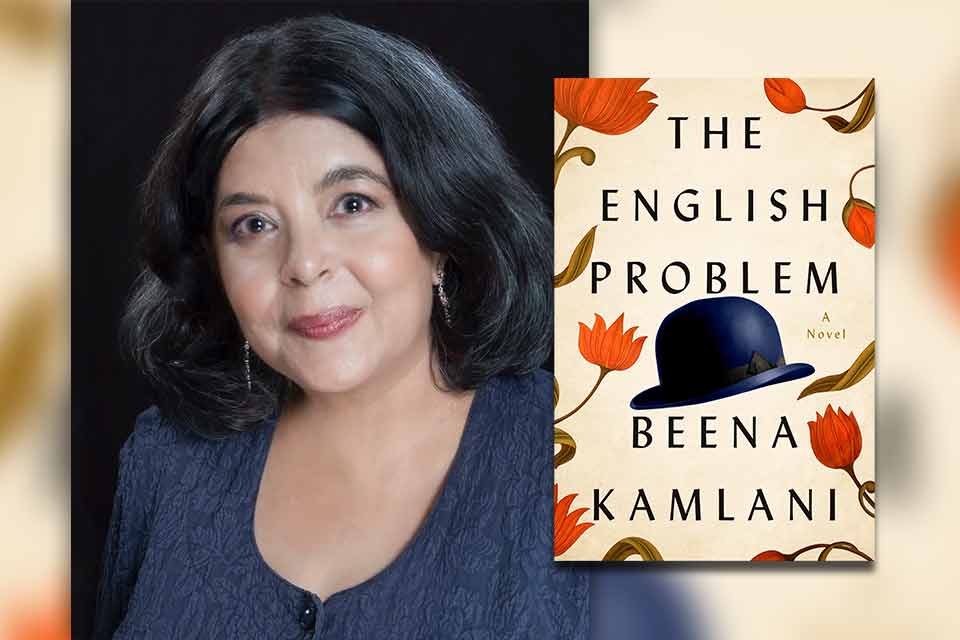
The historical novel The English Problem (Crown, 2025), by Beena Kamlani, narrates the story of a young man named Shiv Advani from Hyderabad, Sindh, in British India who is sent to England to become a barrister. The series of incidents in the novel take place within the span of ten years, keeping the historical incidents of that time as a backdrop. Mahatma Gandhi plays a key role in the story both directly as one of the characters and, also, indirectly. Besides, other important figures from the 1930s like Leonard Woolf, Virginia Woolf, and E. M. Forster are some of the important real characters in the fiction.
Shiv comes from a Gandhian family, and his destiny is planned by Gandhi himself. The novel shows the tensions between the anxiety of meeting the predestined path laid out for Shiv, the burden of high expectations from his family, and his will to lead a life on his own terms. He is always in a dilemma whenever he is left to make a decision or to choose between something. On the other hand, there is the problem of finding a space in English society. For a man of color, it is almost next to impossible to be accepted as an equal human being or a fellow civilian in Britain’s racial history. Shiv’s struggle is a double bind—he has to make a space for his profession and also as a representative of his country. He strives to be one of the British so that his voice is heard but finds himself drifting away from his roots, leaving him in a conflict of identity and belonging. The novel represents Shiv’s journey to find his own voice.
Shiv’s story becomes the mirror of the vulnerability of modern society, and this is one of the strengths of the novel.
The novel skillfully brings together different complexities of life. Stuck between the webs of responsibility, duty, conscience, acceptance, sexuality, and morality, Shiv’s story does not remain a periodical, but it becomes the mirror of the vulnerability of modern society, and this is one of the strengths of the novel. This novel also acts as a filler in the mainstream history, as the author has mentioned in her afterword that she wanted to know more about those people (like Shiv) who left for England between the 1880s and 1930s and returned to contribute their parts in the course of India’s struggle for independence. She has imaginatively portrayed the individual world of such a character within the given frame of historical facts and possibilities.
However, in spite of superb crafting of events in the novel, sometimes it becomes monotonous and repetitive too particularly at the later parts. But that does not stop us from enjoying the flavor of this book. Not only just historical fiction enthusiasts but also readers from any realm would enjoy reading this book as it tells the story of human existence that is not restricted to any particular point in time.
University of Oklahoma