
Reflecting on the meanings of the Dutch verb “uitwaaien,” a writer finds more than a popular national sport of the Netherlands, including a home.
uitwaaien
Dutch, verb
Get some fresh air
In the winter of 2021, when two simultaneous family crises during the pandemic separated me from my husband in Florida and brought me to The Hague where my parents were born, I took long daily walks along the shore in search of relief. I was high on anxiety and physically exhausted. The wind turned my cheeks into hardened wax.
The Dutch verb uitwaaien translates into English as “getting some fresh air,” and although the meaning of this expression may stretch to include leaving your anger behind in a stuffy room or seeking a new perspective, it doesn’t carry the same connotations as uitwaaien does for me. Dutch is my mother tongue; English, my second language.
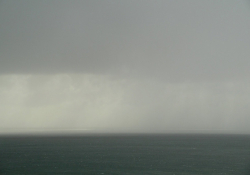
Imagine opening a window in your forehead and another one in the back of your head. Imagine the purging power of a coastal wind as a cross-breeze in your mind, blowing away your worries, vexations, and sadness. Imagine your now-receptive brain connecting to the sea (so unpredictable), the below-sea-level land (so vulnerable), and your ancestors, who fought back the waves again and again, converted water into shifting ground.
Uitwaaien demands surrender. To the elements and the unknown. I cannot simply go out and get what I need. Especially not if I’m enmeshed in two family crises at opposite sides of the Atlantic. I can only receive what I need if I first submit to a force I can neither believe in nor deny. It’s when I open my mind without expectations that the wind will take away what’s holding me back.
My father was a sailor, not by profession but in life; he was happiest on his yacht cruising Dutch and international waters, yielding to the wind. Once, after my mother divorced him, he sailed across the Atlantic to gain back his sense of self. The fix didn’t hold long: he died of stomach cancer when he was fifty-three. When I picture him, I see a smiling man in his late forties, about my age, his dark curls flapping around his head, the force that’s blowing him forward also blowing his mind.
I grew up along a river dike several meters below sea level. My family name, my father’s name—Polders—means reclaimed lands. In 1953, when a combination of high tide and a heavy northwestern storm caused multiple dikes to break, the North Sea flooded parts of our land that were as high as five meters above sea level. Over 1,800 citizens were killed overnight, and many more were left stranded on their roofs in the February cold. My great-grandparents were among the stranded and survived the ordeal. The next year, the Dutch began building the Delta Works, an extensive system of dams and storm-surge barriers that took over four decades to complete. As a child, I was in awe of these works—one of them rose nearly in my backyard. Still, I was more in awe of the wind and what it could do to the water. During each storm my attic roof howled and beautifully sang. I was on a fairground ride, my fear a delightful surrender.
In the winter of 2021, when anxiety wouldn’t let me sleep more than a few hours a night, I hesitantly began a meditation practice. I put on my noise-cancelling headphones, lay or sat in bed—the floor was too cold—and listened to the voices guiding me toward calm. Breathe in, breathe out. As long as the voices spoke, I was all right, but as soon as they left me, my heart raced. My breath was not enough of an anchor. My practice improved when I discovered I could pick a soundscape to keep me company after the instructions echoed out. Better than crashing waves was hearing the wind whistle. Uitwaaien involves the numbing force of white noise.
As I attended to my mother’s distress, brought on by Alzheimer’s, and her quiet yet clear request for euthanasia, my husband across the Atlantic found himself shoulder-deep in the muck of a family crisis that involved his mother’s sudden death, his father’s dementia, and more. Each afternoon, he and his father walked to the dock on the windless St. Johns River to see the sun reflecting on the water like a thousand winks. There must be a word for seeking solace in beauty.
The English word “inspiration” comes from the Latin verb inspirare. For the longest time, I erroneously believed the verb meant “to breathe in.” I thought it was my task as a writer to breathe in ideas and breathe out stories. Recently, I discovered that inspirare means “to breathe into,” and the noun “inspiration” means something closer to “having been breathed into.” In other words: when I feel inspired, it’s because something (or someone) is blowing ideas into my mind.
In the safe middle-class Dutch environment of my youth, “spirituality” was a dirty word. My family members and their adult friends were practical people, down-to-earth, sensible. Their post–World War II generation had transitioned from the frugal Catholic/Protestant divided land of their parents to a secular society in which life revolved around school schedules, soccer matches, birthday parties, music recitals, and national holidays. Rituals and other organized efforts to escape the embodied stress of everyday life were suspicious if not ridiculed. Yet uitwaaien is a popular national sport in the Netherlands. It’s also a walking meditation. Nobody slugs through the rain just to get some fresh air. Uitwaaien approaches self-transcendence and can feel like getting high.
Uitwaaien approaches self-transcendence and can feel like getting high.
In 2000 I exiled myself from the lowlands to study philosophy at the Sorbonne. I fell in love, got married, moved into an artist atelier in Paris, and lost that atelier in the winter of 2019. Not knowing where else we wanted to live, my husband and I became nomads and traveled the world. We ventured up Swiss mountains and into the Sahara Desert yet found ourselves most often at the coast. Waves crashed onto the shores of Sicily, Tenerife, Mexico, Vietnam. Wind is called to places where ocean and land meet. In the absence of an address, uitwaaien became my new home.
My mother never moved away from the dike along which I grew up. She was a dissatisfied schoolteacher who corrected the spelling mistakes in my earliest attempts at writing and transformed herself into a marketing person to gain self-respect. She was happiest in the arms of her older partner whose death robbed her of meaning. When she climbed the dike, with me or alone, she couldn’t surrender. She would swing her arms for aerobic exercise and envy the houses of the rich. Natural beauty restored her, though, the purple crocuses poking through the patches of leftover snow, the red roses in a vase, reminding her of how she’d been loved.
A secondary meaning of uitwaaien is to extinguish, like the flame of a candle dying in the wind.
I grew up on my father’s boat more than in my mother’s classroom. Not only did I spend all my childhood summers on the water, rain or shine, I also learned important life lessons from sailing with my dad: how to collaborate as a crew, keep your balance on a slippery surface, turn labor (scrubbing the deck) into joy (water fighting), steer yourself calmly out of unexpected dangers, navigate a vast space without paths.
My mother died of Alzheimer’s on a day of her choosing when she was seventy-five. Her death was the end of one family crisis and the beginning of a profound disorientation. I had grown used to being a nomad, yet losing my mother sent me adrift in additional dimensions. My grief was/is visceral. Now, when I take long walks and open the windows in my head for a cross-breeze, I seek a connection I can no longer have in the flesh. Uitwaaien ties me to my parents, the reclaimed land of my birth, my father’s name, my mother’s tongue, the sea scent of origins.
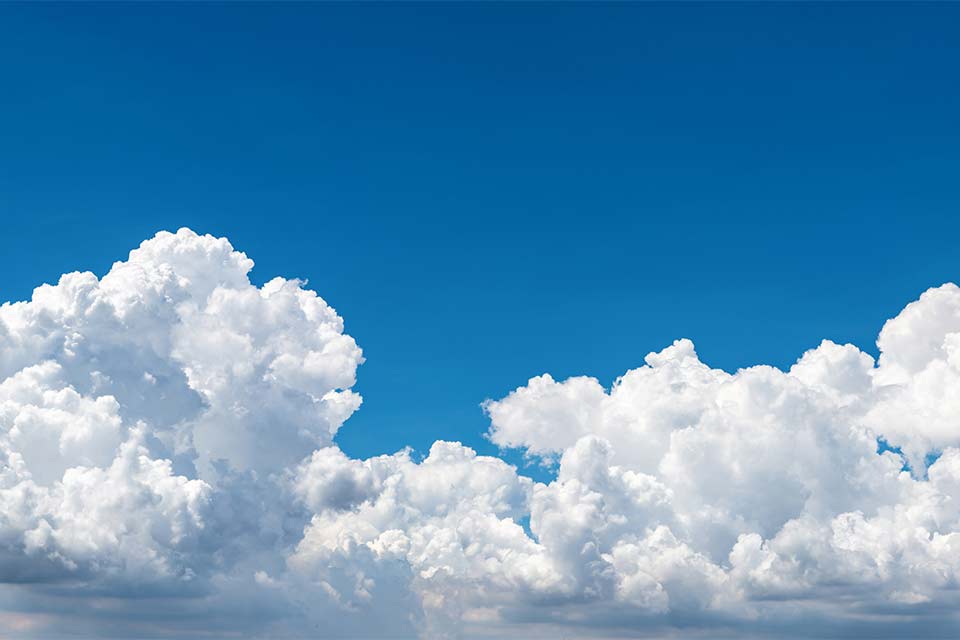
The Dutch masters from the Golden Age (roughly the seventeenth century) are known for their dramatic, ominous clouds. On some paintings they dedicate most of their canvas to the sky. Not because clouds represent heaven, I like to think, but because they represent change. Clouds are transforming shapes of water forever traveling on the wind. They are the unstoppable cousins of waves, disregarding our dikes and dunes, floating over the land and invading areas the sea can never reach. Even if they don’t conspire into storms, clouds remind us that it’s hubris to believe in the endurance of what we love. The puffy clouds most prevalent in Holland look like brains.
Clouds remind us that it’s hubris to believe in the endurance of what we love.
I’m afraid of losing my mind like my mother did and know that this fear puts me at risk. Scientific studies indicate that anxiety makes one more susceptible to dementia. When I submit myself to the purging power of uitwaaien, I sometimes picture the wind as armed with brooms, brushing away my protein plaques. Such an expectation, however, sets the experience up for failure. True surrender knows no demands.
Fortunately, I’m not afraid of death. Possibly because I’m relatively young and appear to be healthy. Possibly because I believe I will be gone when death arrives. Then again, I can imagine my last transmutation with ease. Instead of white bones in cold dirt, I see myself flying free from an earthen urn and forever blowing in the wind.
Uitwaaien