We are never “just reading.” When I’m reading, I’m doing multiple things at once. I am reflecting on my past mistakes at the same time I’m learning about the future of AI and technology. In the process, I’m also discovering more of the world and myself. But here’s the awkward thing. When I close the book, and sometimes from that very moment, I forget everything I’ve learnt.
I think this is why some people claim that reading is “useless.” How many of us can remember a book we read last week, not to mention a year ago? I’d struggle to even recall the title, as if my memory is shrouded by thick fog. Is reading really a waste of time? The thought fills me with dread.
Is reading really a waste of time? The thought fills me with dread.
Until I can find a way to save everything in my memory, I’ll settle for collecting my favorite quotes. I may not remember everything, but at the very least I want to make sure that I won’t lose the good sentences. That’s why I always have a pencil when I read, so that I can underline the sentences that speak to me. Occasionally, I scribble a note at the side. Whenever I need to refresh my memory, I can simply follow the trail of pencil markings.
Because I’m so used to doing that, it feels weird to read without a pencil. I always keep an extra or two in my bags, and on the rare occasion I am without one, I won’t (can’t) read.
But underlining the text doesn’t solve the issue of the “forgetting curve.” Some time back, I was reading the Korean edition of Alain de Botton’s The Consolations of Philosophy. I liked it, yet I couldn’t help but think—He’s really milking this, isn’t he? Hasn’t he already written something else about Socrates, Seneca, and Schopenhauer? But then I thought, that isn’t a flaw, so I cast aside my complaints and returned to the text.
After finishing the book, I put it back onto the shelf and soon forgot about it. One day, a sudden thought struck me, and I quickly pulled out a book from my bookcase titled, in Korean, The Happiness of Young Werther. I zoomed in on the contents page and confirmed my suspicions—it was the exact same book as The Consolations of Philosophy. I had read Consolations without realizing that it was a new edition that opted for a more faithful title to the English, and I had annotated it as though I was reading it for the first time!
I snorted in disbelief. Then a thought tickled my brain. Haven’t I read about that in a story before? I pulled out Patrick Süskind’s Three Stories and a Reflection, which, true to its title, consists of three short stories and a personal essay. There it was. In the last story, “Amnesia in Litteris,” he describes how, despite reading voraciously for more than three decades, he barely remembers the details of any book. I had just experienced the same “literary memory loss.” Süskind says: “If we don’t even retain a shadow of memory, despite having read it only recently, then why do we read?” He mulls the question over and arrives at the conclusion that reading isn’t about remembrance but the change that can come from reading a book.
You can transform your life—Süskind believes this is why we read. I repeat this under my breath, feeling comforted knowing that if I am a slightly different person after reading a book, it’s OK if I don’t remember every word.
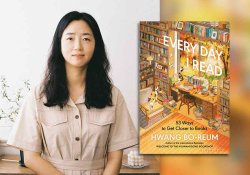
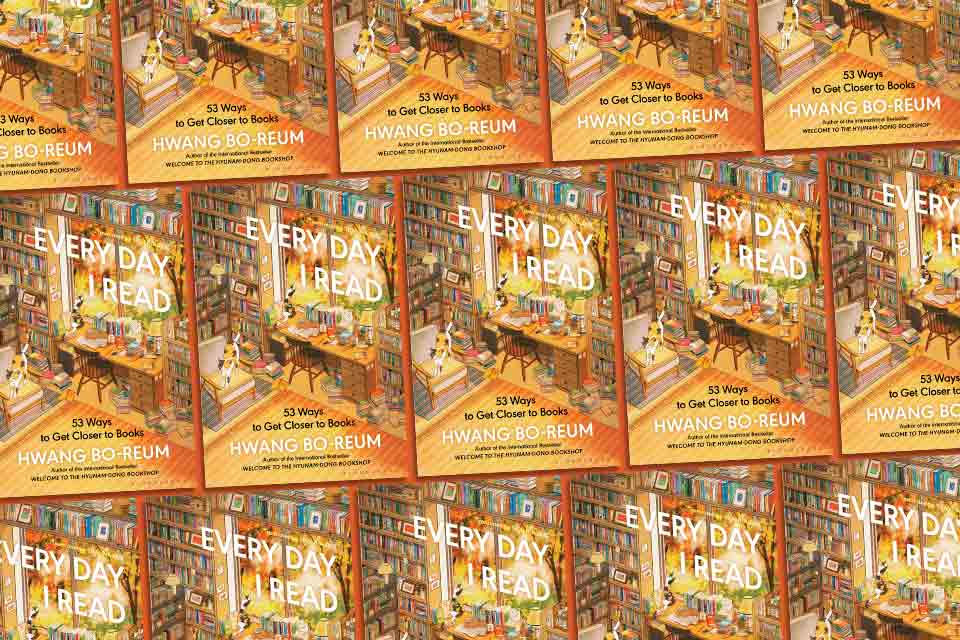
Editorial note: From Every Day I Read: 53 Ways to Get Closer to Books, by Hwang Bo-reum, translated by Shanna Tan (Bloomsbury Publishing). Copyright © 2025 by Hwang Bo-reum. All rights reserved.