
The suitcase smells, it’s unusable, but how can a daughter let go of her father’s suitcase, the very case he may have taken back to India on his first trip back after immigrating to the US?
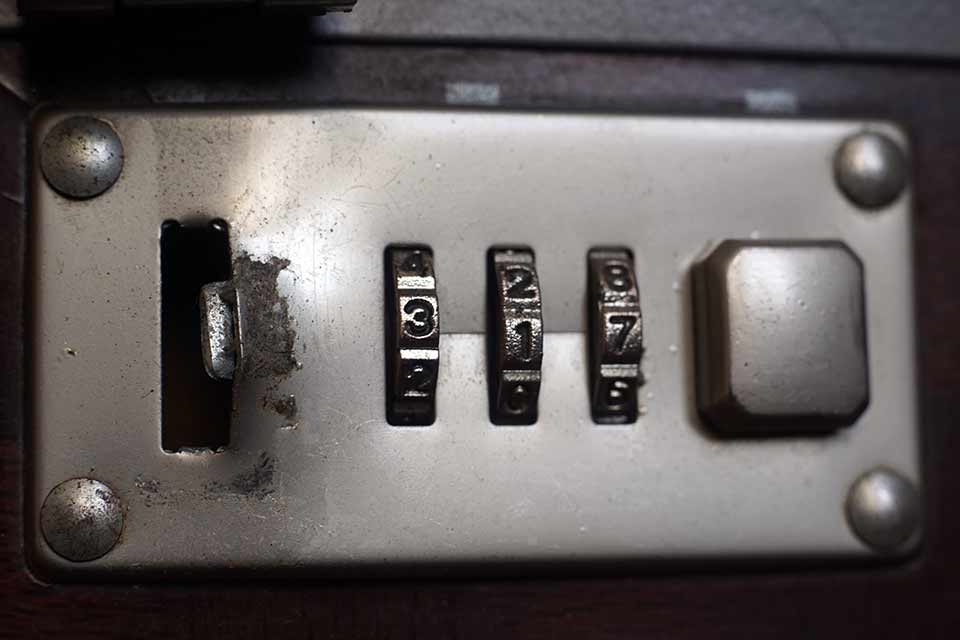
I cannot get rid of his suitcase. It’s old and charcoal-gray, hard plastic from the ’60s, unusable now in 2015. The locks don’t work. Well, one of them does, but the other doesn’t close unless it is properly aligned to the nanometer. It smells. I have tried, unsuccessfully, every method known to mankind to get rid of the smell: vinegar, disinfectant, baking soda, coffee grounds. There is a divider consisting of a plastic latticework grill attached to fabric, on which a name is written, that separates the two sides of the suitcase. I even tried cutting the divider out to see if that would get rid of the smell, but no luck. There are a number of factors that may have contributed to the musty odor: sitting in a damp Midwestern basement, acrid Indian pickles, or the absorption of tropical mold on the fabric divider.
Under my father’s name on the divider is written a Los Angeles address that does not exist anymore—I know, because we tried to go there years ago. The parcel of land has been split up into multiple plots, and we encountered a friendly Asian American couple who live near the location where my parents’ rented home was. According to my parents, it was a dilapidated mansion that once belonged to a famed Hollywood director. Lest anyone think it was fancy or glamorous, they said it was something right out of The Munsters. Their friends, an engineer and his wife, rented another part of the house. All that remains is a crystalline doorknob that my parents kept for posterity.
I cannot get rid of the suitcase, because inside it is the name of an immigrant man.
I cannot get rid of the suitcase, because inside it is the name of an immigrant man. It might have been the suitcase he took back to India on his first trip after immigrating here. He had first come for graduate school in the Deep South—pre–Civil Rights era, mind you—to do a PhD in chemistry. He had just $20 in his pocket, as the story goes, although knowing my father, it could’ve been $22 or $36.32 or $41.87, but the point remains: he was alone and practically penniless. He wouldn’t have known when he could go back to visit his family, and so in my eyes, the suitcase is a triumph. A sign of establishment, that one has done well enough in a new land to purchase luggage that will withstand the rough-and-tumble of baggage handlers, bumpy carousels, and takeoffs and landings in, say, London, Paris, Frankfurt and Beirut before reaching a dusty airport on the final destination of the subcontinent. It would have sat under a bed or in a corner of my grandparents’ house, once emptied of the gifts and toys and any sign of modernity previously unprocurable in India. These days, the reverse is the case–we leave our suitcases half-empty when departing the US in anticipation of acquisitions like clothing, jewelry, foodstuffs, and gifts, filling them to the point of risking an excess baggage charge when we return home. Our Indian relatives can now get anything there that we have here.
I cannot get rid of that suitcase. It sits, empty, under the bathroom sink, with other things on top of it. I can’t even use it for storage because of the smells. Though my apartment is a studio, and though I am a very organized minimalist, I still keep the suitcase. I make one last attempt at airing it out, cleaning it, disinfecting it with the hopes that the stench will be gone and all will be well. No luck. The situation remains: either I accept the suitcase as it is or continue the endless battle of trying each new purported remedy I can find online. There is, after all, a possibility that I could find some sort of industrial-strength cleaner, one that would get rid of the smells and allow me to preserve this family relic.
I am moving. I have to get rid of everything I don’t need, because I have to ship a few boxes across the American continent, and that is costly. My drawers are emptied of contents, knickknacks, dishes sold or given away, the closets combed for clothes that are pilling or no longer in style. This also means I have to get rid of the suitcase. I have to give it up, smells and all, for it is unusable. There are other heirlooms and objects that will be retained as a symbol of our family history. I place the suitcase in the trunk of my tiny, ancient Toyota and drive to the Salvation Army, where I unload my cargo and receive a receipt. Before I have parted with this item, I have taken photographs of it in my apartment to memorialize it, digitally.
Perhaps I can breathe a sigh of relief—after all, that thing was old, smelly, useless, and took up valuable storage space in my bathroom. What is the point of hanging onto things, anyway, when they are not used, for they create unnecessary clutter and, I’m guessing, if you are into it, bad feng shui? Memories are our most precious possessions, such as family stories, remembrances of times past, reflections on meaningful events. And writers always honor experiences through words, transforming the concrete into the ephemeral. Shakespeare spoke of the power of his poetry to outlive that which was mortal. Sonnet 81 tells us, “Your monument shall be my gentle verse / Which eyes not yet created shall o’erread.” So we can pay tribute to that which we have lost through the word, keeping beloved objects eternal, immutable, immortal.
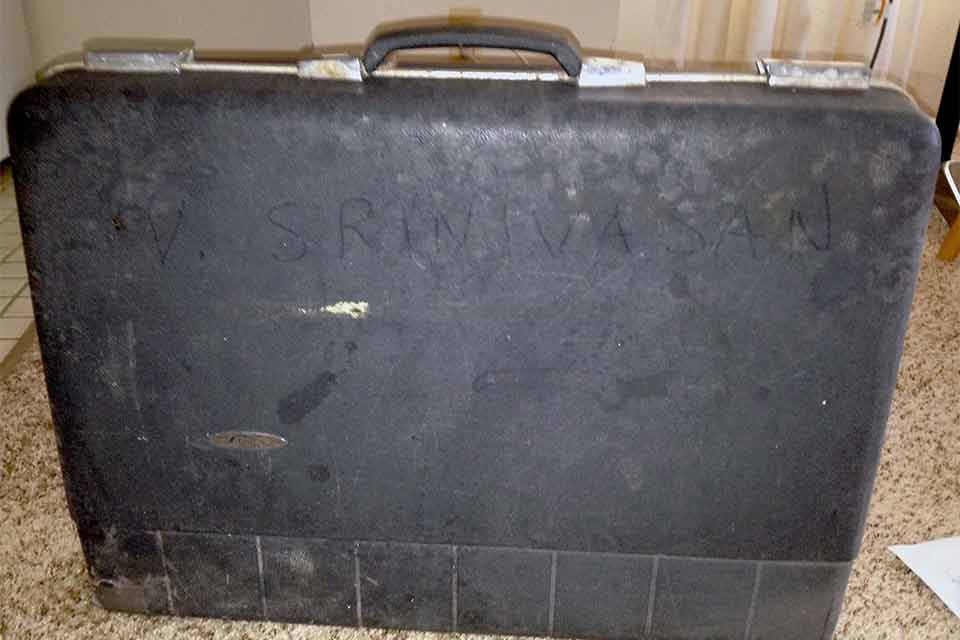
We can pay tribute to that which we have lost through the word, keeping beloved objects eternal, immutable, immortal.
I cannot get rid of my car. It’s nineteen years old, slow to accelerate, and by now, I have sunk more money into repairs than the car is worth. I’m moving back across the continent, and there is no way it will handle those frenetic California freeways since the pickup is not adequate for an on-ramp. The locks are manual, as are the windows—something that is not ideal when you are summoning a friend who is looking for your car. There is a bit of rust around a wheel well. The trunk is so small that it is barely able to fit a suitcase in it; more often than not, groceries are relegated to the back seat.
I cannot get rid of the car. It has ferried me around town, to classes, across the US when I took a road trip with my father, up and down a freeway to voice lessons on the opposite side of the country, this minuscule navy-blue Toyota Tercel (which I dub “The Small Blue Wonder,” as it can dart in and out of tight parking spaces), a model they no longer make. I already have my ticket, nonstop on Delta—a five-hour flight, because it is against the jet stream, instead of the 4 1/2 hours, or 4 hours and 38 minutes, or 4 hours and 47 minutes, depending on the tailwinds, when flying in the opposite direction. All I can take with me are suitcases and a backpack with my laptop. I have shipped the boxes with books and other necessary personal items, but a car is a whole different matter. Hopefully, there will be some grad student who needs wheels to get from home to campus to the grocery store to the movie theater to wherever else it is a grad student needs to go. I will accept any reasonable offer, or even an unreasonable one, as I must jettison this vehicle.
But I cannot get rid of the car. It is the first car I have bought on my own, from a young Canadian immigrant couple who were moving back to their country, clean and with low mileage. I have kept it in mint condition—the body is spotless and the interior immaculate, save for a small chocolate ice cream stain thanks to an untidy passenger. And besides, my mechanic, who has serviced it for years, has said that he has never seen a Tercel in such good shape.
Ann Arbor, Michigan