
What is your native tongue? For some families, the question of linguistic identity can be hard to answer.
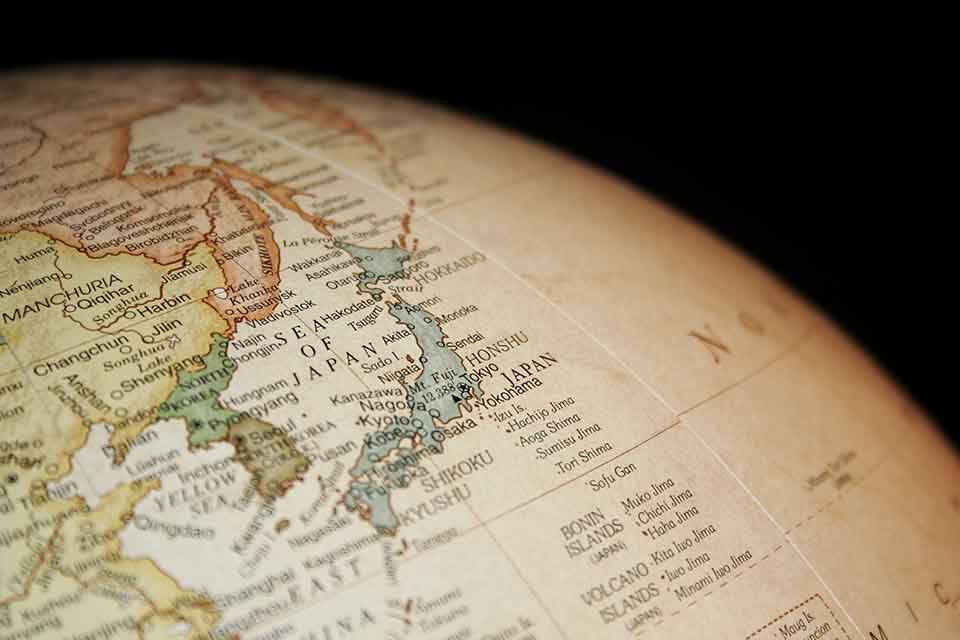
I come from a family of Korean ancestry. Yet I do not speak Korean. I was born in Japan, and Japanese is my mother tongue; there, they called me Noboru. But that language ceased to be my primary one after we immigrated to Canada when I was two. Today, at forty-eight, I thus write in French more by force of circumstance than by choice.
On the eve of that great departure to Canada, my linguistic identity could have leaned toward Korean, or Japanese, or even some other language. In reality, however, the choice was made over my head by my parents and, on a grander scale, by historical and socioeconomic factors. I cannot claim that I chose French. For me, it’s simply a matter of deculturation. French is my adopted language, but isn’t it more accurate to say that it adopted me, much as parents might adopt an orphan without the child’s consent, with results that may be fortunate—or not?
When we arrived in Canada, my father could have settled us in an English-speaking province, but he chose Quebec precisely because French was spoken there. He clung obstinately to that decision. Why? Because in Asia, among the educated of his generation, French had long represented a language of prestige, far more so than English. It was the lingua franca of intellectuals, a charismatic tongue flowing with the ink of Gide, Camus, Malraux, Mauriac, and exuding the subtle perfume of the Sorbonne . . . At Yonsei University, where he had studied (mathematics), he had chosen French as his mandatory second language option. He had believed that knowing a bit of French, he could swiftly adapt to life in Quebec.
I speak, I think, I exist in an “accidental” language, and becoming a writer, too, was an accident.
As for me, I can say that I chose to make French my principal professional pursuit. If I write in French, it’s not so much because I find the French language beautiful but because I have “something to say.” And paradoxically, what I have to say is tied to my condition as an exile. I speak, I think, I exist in an “accidental” language, and becoming a writer, too, was an accident. The craft of storytelling is a legacy bequeathed by my condition of exile. Perhaps I ought to be more grateful to my adopted tongue? I taught French as a foreign language in South Korea for three years, and as a second language in New Brunswick for one year. It is my bread-and-butter language, the one that allows me to live and earn money, even if it’s only to buy and eat kimchi.
Three generations ago, my Korean ancestors lived in the Land of the Morning Calm. What happened that I, their descendant, now find myself at the other end of the earth, as though in some parallel, improbable universe? History’s locomotive barreled through the Hermit Kingdom, sowing chaos in its wake. I am a child of that chaos. The Imperial Japanese Army landed in Korea and, at bayonet point, forced an entire generation of Koreans—from 1910 to 1945—to speak Japanese in their own country. Young Korean children were forbidden from speaking their language inside school walls. They sometimes even denounced one another, and the teacher—heaping absurdity upon injustice—would punish the child who dared speak his mother tongue!
My father was born in a suburb of Seoul, yet he spoke Japanese as fluently as Korean. He had no choice. Among the Korean writers of his generation was a love-hate relationship with Japanese, that language thrust down their throats.
As for my mother, Mitsouyo, she was born in Japan and spoke Japanese all her life, even though her parents addressed her in Korean. Many Koreans were deported to Japan and made to work in the mines. My mother did not choose Japanese as her first language, either. All her life, she harbored a lingering regret at never speaking Korean fluently, even though she understood it. This did not prevent her from adoring Japanese novels or writing haiku.
From what secret recess, at the brink of death, had these shards of Korean emerged?
As for my maternal uncle, my mother’s brother, a curious phenomenon befell him. All his life, he spoke Japanese, this language of the invader and colonizer, this language of exile and humiliation, this language that was nonetheless his first language, his functional language, his language of daily communication, his language of work, his language of leisure, this language that had been imposed on him, one that had deterritorialized him—bleaching out his Korean identity and rendering any “return” to Korea an illusion. When my uncle grew old, his kidneys failed, and he remained bedridden until his final hour. He lay dying on his hospital bed and, in his agony, uttered nothing but Korean—he who had never once spoken that language before. His family could scarcely believe it. From what secret recess, at the brink of death, had these shards of Korean emerged?
It’s true that the Korean language has a certain kinship with the language of pain, with pathos.
Montréal
Translation from the French
by Ye Ram (Esther) Kim
Ook Chung’s La trilogie coréenne explores the fraught intersections of language, diaspora, and historical memory through the lens of a Zainichi Korean family dispersed across Japan, Korea, and Quebec. Born in Japan and raised in Quebec, Chung writes in French—what he calls his “accidental” language, inherited not by choice but through colonial and migratory circumstance. The excerpt translated here, “Shot Silk and Shadow Play,” reflects on the linguistic ruptures and cultural ambivalence that mark a diasporic existence shaped by forced assimilation and postcolonial dislocation.
As a translator, I was struck by the subtle tonal shifts in Chung’s prose—at once reflective and wounded, analytical yet intimate. His voice moves fluidly between historical account, philosophical rumination, and personal confession. My goal in translation was to preserve the layered emotional register and semantic ambiguity of the French, while respecting the texture and rhythm of the original.
This translation forms part of my doctoral research, which brings francophone Korean and Maghrebi diasporic literatures into critical, transnational dialogue. Chung’s exploration of linguistic estrangement, colonial residue, and diasporic inheritance mirrors many of the thematic concerns at the heart of my scholarship, making this translation both a literary and intellectual engagement.
Editorial note: From La trilogie coréenne, by Ook Chung (Boréal, 2012), © 2012 by Ook Chung. English translation copyright © 2025 by Ye Ram Kim.