
It’s 2017. I am a relatively new author wandering through the glittering chaos of a Vancouver Writers Fest gala. She is Chrie Dimaline; a goddess in the literature scene, winning each award there is; crowning every bestseller list.
The room is crowded with bright lights, canape food, and big hats: industry people laughing loudly at tables more about networking than literature. I step outside, looking for air, and so does she.
“Don’t tell anyone I’m here,” she whispers, conspiring. I nod and laugh. We hide from the rain under the Burrard Bridge and listen silently to the cars racing above.
She asks me about my work, about my path so far. I tell her the truth: my debut novel had been published by a press that paid me a $500 advance. I remember her face, the look of shock and indignation, almost maternal in its fierce protectiveness. I want to downplay it, but I’m not giving the chance.
“That’s not right,” she cuts in.
The next morning, an email lands in my inbox: Cherie took it upon herself to connect me with her own agent. That agent is still mine to this day.
That night, Cherie didn’t just offer me advice; she offered me a path. I’ve carried that act of generosity with me ever since, because it was more than a professional courtesy. It was an act of care. And care, I’ve come to realize, is the thread running through everything Cherie does.
Cherie asks me who I’m with that night, and I tell her about my table: a group of queer and trans authors of color in a booth at the very back. The gala swirls at the front; chatter and polished speeches, but Cherie chooses to join our little booth instead. She wants to hide there, she says. I think the truth is she was more interested in being in community with us: the queer authors, the brown scriptwriters, the Indigenous trans poets.
A trans Indigenous woman who is a dear friend gasped when she saw Cherie. She instantly cried. She spoke about the profound impact of Cherie’s writing. She described how The Marrow Thieves had given her something rare: a reflection of her community’s survival and future. Others nodded, adding their voices. And there was Cherie, listening more than she spoke, receiving their words with humility. She didn’t center herself; she let their testimonies breathe.
That moment has stayed with me. It crystallized something I already knew: Cherie is not just a writer. She is a mother in the community, a beloved auntie to many. She is someone who knows that stories do not end on the page: they ripple outward, reshaping lives and futures.
Cherie is not just a writer. She is a mother in the community, a beloved auntie to many.
When I was invited to serve as a juror for the NSK Neustadt Prize for Children’s and Young Adult Literature, I knew immediately whom I would bring into the room. Each juror was asked to nominate an author, to introduce their work and their significance to the rest of the panel. Cherie was my choice, not only because of her remarkable books but also because of the stories I carried about her presence, her care, and her role in our literary landscape.
The jury process is conversational, almost like a long, unfolding dialogue among peers. Each of us shared our chosen authors with the others, discussing their work, their contributions, their legacies. Amid that, I told the stories I have just shared with you: the night she redirected my career outside a Vancouver gala and made me the author I am right now.
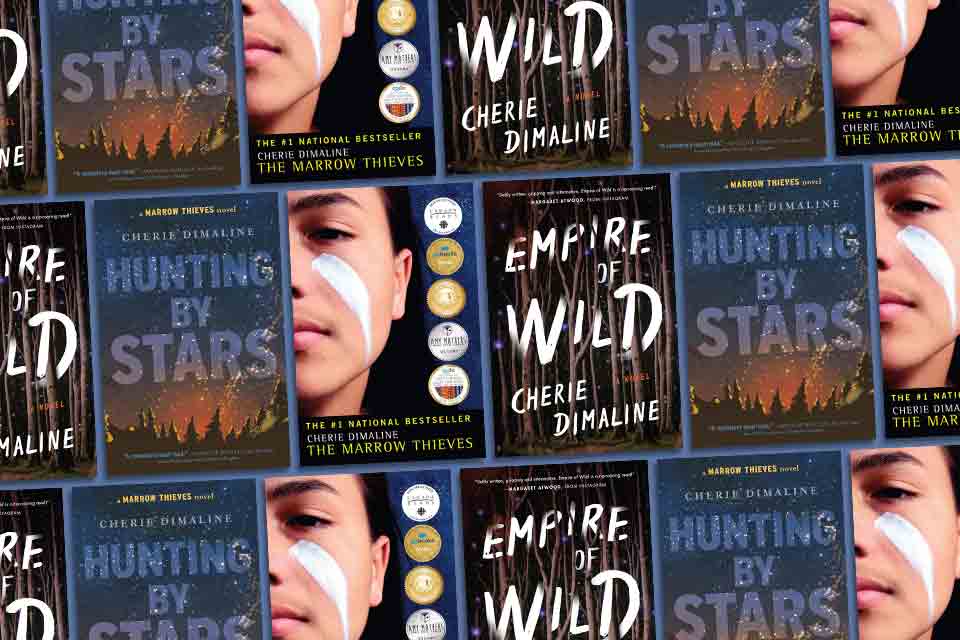
Her books spoke for themselves. The Marrow Thieves had already become a modern classic, winning accolades across Canada and beyond, opening doors for young readers to imagine futures through Indigenous perspectives. Empire of Wild had cemented her place as a novelist of daring and vision. But what I wanted the jury to see was not just the brilliance of her writing but the generosity of the person behind it.
And they did see it. From the beginning, there was a sense that the room leaned toward her. My fellow jurors had read her work and recognized the force within it. They spoke of the clarity of her voice, the urgency of her themes, and the resonance of her characters. By the end of our time together, it was not just me advocating for her; it was all of us holding her up.
On the final day, one juror came to me privately. She told me there had been no doubt in her mind from the very start that Cherie was the one who would win this award. That affirmation filled me with joy. It felt as though the care I had once received from Cherie had been, in some small way, returned.
It is tempting to speak of awards and accolades as if they alone define a writer’s significance. And Cherie has many: Governor General’s Awards, the Kirkus Prize, Indigo’s Book of the Year, international recognition that continues to grow. But to measure her impact only in trophies is to miss the larger truth.
Cherie’s importance lies in her double gift: she creates worlds on the page that speak directly to readers, and she creates space in real life for writers who come after her. She has been a fierce supporter of Canadian literature, with a particular commitment to Indigenous and POC voices. She has lifted others even while climbing herself.
Her books matter because they tell stories that carry both warning and hope. The Marrow Thieves imagines a dystopian future where Indigenous people are hunted for their ability to dream, and yet the novel itself is a dream of survival, of youth, of reclaiming what was stolen. Empire of Wild takes Métis legend and places it within a contemporary love story, unflinching and fierce. Her sequel Hunting by Stars extends the journey, reminding us that stories never end where we think they do. And yet, beyond all this, Cherie herself matters because she has never forgotten that literature is community work.
To sit with her is to feel both seen and challenged, embraced and encouraged. She brings the same care to a conversation with students as she does to an international jury stage. She is the kind of writer who knows that stories are truly sustenance.
When I look back at my own career, I see a line that runs through Cherie. The night outside the Vancouver Writers Fest when she insisted I deserved better. The UBC table where she let others tell her what her work meant to them. The NSK Neustadt Prize, where I had the honor of bringing her name forward and watching the room gather around her.
To have been part of her recognition is one of the greatest honors of my career. It felt like the universe offered me a chance to return a fraction of what she had given me. She once opened a door for me; I had the privilege of helping open one for her. Of course, Cherie doesn’t need me, or any single person, to justify her place. She stands firmly on her own body of work, her voice, her community. She is already a cornerstone of Canadian literature, and her influence is only expanding globally.
I find myself looking forward not only to what Cherie will say but to how it will ripple outward.
As she prepares to deliver her keynote, I find myself looking forward not only to what she will say but to how it will ripple outward. Because that is what Cherie does: she speaks, she writes, she listens—and from those acts come change, care, and continuity.
Cherie Dimaline is a writer of rare talent. But she is also something rarer still: a keeper of community. Her words build futures, her presence builds trust, and her generosity builds paths for those who follow.
For all that, and for what she gave me, I remain deeply grateful.
Vancouver