
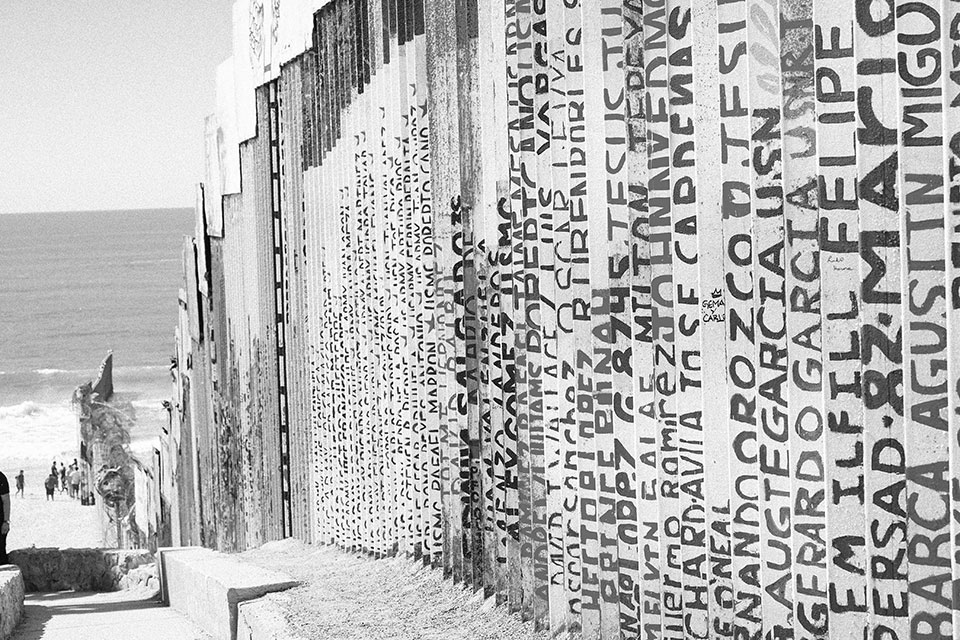
I smuggled you across the border, that no hand
of those who find joy in their labor might touch you
no hand of those dealing
in blood,
though no one
misses you as I do, your father perhaps,
or your brothers, I saved you when you told me:
Mom, they’re fixing us like buns in the oven
so that we’ll come out at the right time
ready to serve the sword, though
constantly, every evening
I miss you and count your good days far away from here.
Your good heart stands firm against the flood
of brow-raisers, but it is I my daughter who saved you,
for since the day you were born I whispered in your ear:
Don’t fall for the enamored talk of destruction.
We are strangers to any man.
And then you refused to sing “To Be a Free Nation,” you
couldn’t say
free because you knew: not free like a bullet shot through
a rifle’s scope
to the head, for much is the grievance and much the
sacrifice
and the heart untouched by suffering
as if eighty years is not man’s lot upon this earth
My daughter, both of us shall know
that from the day you were born
I pushed you away
so that you’ll learn to live without me across the border
with a friend, a lover, my forsaken heart,
one bun saved for good from the all-consuming oven
In the room the women talk
about everything that can enter
the mouth, a cookie from the buffet
or a dress from the magazine
or Courbet’s Origin of the World in the
Musée d’Orsay.
One of them had been there last summer with her ex-husband. What do you
think, girls,
about the shooting soldier, could have been
my son, yours,
hers. Did anyone read the latest thing from
Grossman, Moroccan pillows
on the sofa like guests in the living room,
guarding
the door, who is that coming, let’s read,
never understood
poetry, but Poe is cool,
we really like him since high school.
Translations from the Hebrew