
Noguchi called it remembering his travels
to the naked-eye observatories at Jaipur
& Delhi — those architectural marvels
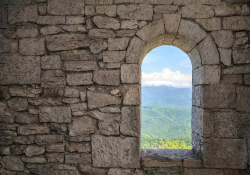
of brick rubble & lime plaster: their arched
apertures, measured quadrants,
staircased sundials casting gnomon-shadow
while nightly inviting visitors to stargaze.
A “birthing experience,” he described,
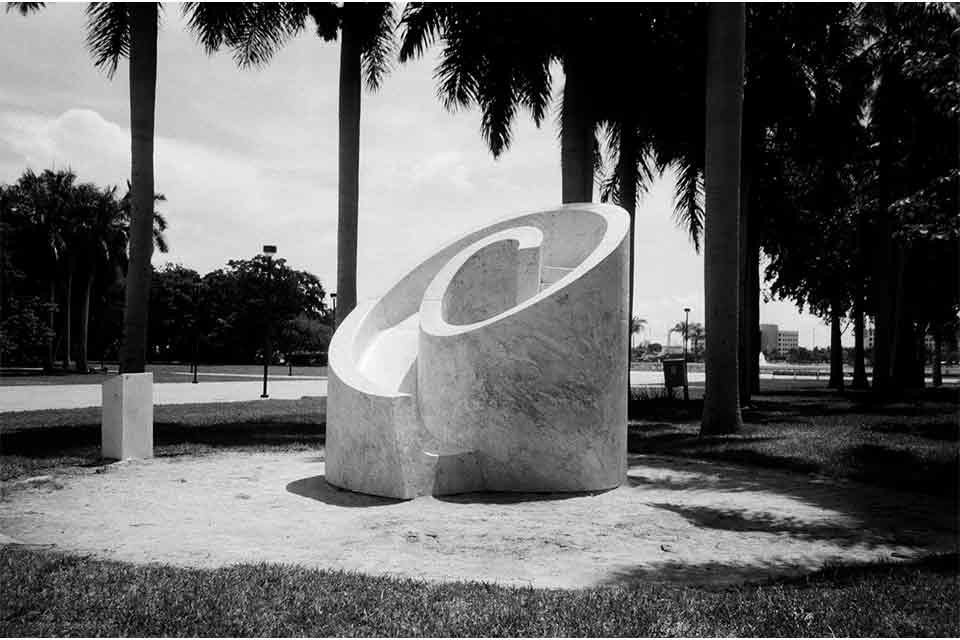
at 82, riding the marble curve — its twist
tying a figure nine — after installing
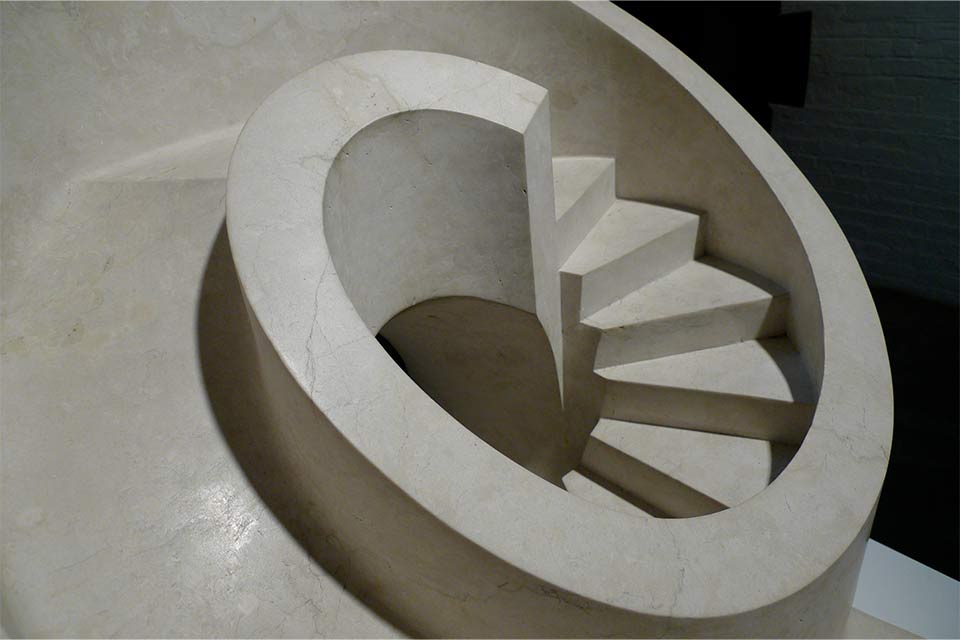
at the Venice Biennale the stone slide,
one of his final works. Standing before
the maquette, I see treble clef, an alginate
mold for dentures. An older father
& unsure if I still know how to play,
I am studying the imagined playgrounds,
wondering what my mantra might be.
From slot canyons, winter’s Santa Anas
shook the windbreak of old eucalyptus
the night you were born. Maternity was
at capacity — abrupt changes in air pressure
triggered by the strong gusts, the night
nurses explained, cause a mother’s waters
to break. A slide is a mountain’s slope
rockfall, & scree. Noguchi’s is both
a slash mark’s caesura & an ampersand’s
aggregate speed. You came wet, a mix
of blood & vernix, & with your soft spot
on a still-forming head. How assuredly male,
I think now, how modern to tugboat
the tons of Carrara marble alongside
the Grand Canal’s taxiing gondolas,
then fashion something so white,
so pristine. You came despite your tía
telling your mother those first contractions
were probably just gas. You came after hours
at home, your mother laboring from sofa
to bed to shower to Prius — crowning then
in triage before nurses could Covid test
or assign us a bed. I stood with unlit candles,
my swim trunks for a tub birth,
a cell phone’s playlist — all suddenly unnecessary.
From its entrance, the slide’s staircase bends —
a Möbius surface, I imagine, with echoes
of footsteps. With a vowel I couldn’t type,
you came — a long cry slipping without
consonant, a wail open-throated & oculus:
framing a forgotten infinite. Dar a luz,
I learned to say in my pocho Spanish.
The light that plays in words like ecstatic
& ekphrastic begins outside, begins
in displacement. Your mother birthed then
the birth less remembered, that other planet —
a wet black placa, a sojourner’s satchel spent
of nourishment — as you suckled & passed
unceremoniously the tar-dark meconium,
a Greek word for poppy, for opium.