
On February 26, the American Society of Magazine Editors announced its list of finalists for the sixty-first annual National Magazine Awards and included World Literature Today’s July 2025 “Gaza Voices” issue as one of five magazines in the Single-Topic category.
According to the organization’s website, the National Magazine Awards—sponsored by ASME in association with the Columbia University Graduate School of Journalism—are considered “one of the most prestigious journalism-awards programs in the United States. . . . Each of the finalists will be honored—and the winners announced—at the presentation of the National Magazine Awards in New York City on Tuesday, May 19.” The other magazines honored in the same category include The Atlantic, Bloomberg Markets, New York Magazine, and Orion.
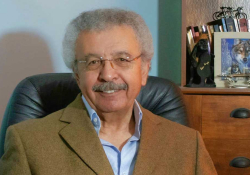
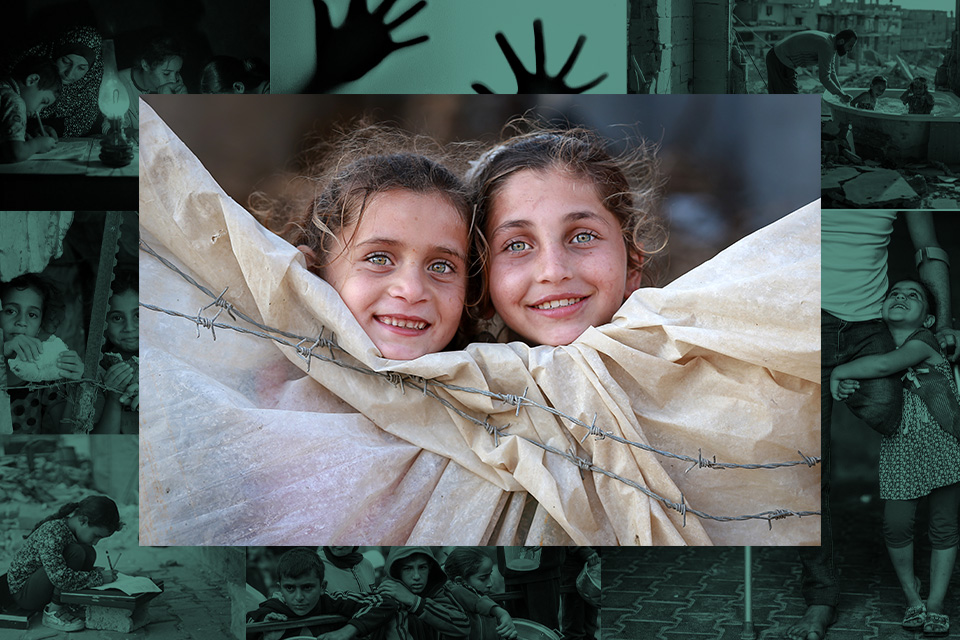
Gathering the work of more than three dozen poets, writers, photographers, and translators, “Gaza Voices” represents one of the most important issues World Literature Today has ever published. Yousef Khanfar, who guest-edited the landmark feature, had this to say in his introduction: “‘Gaza Voices’ is a powerful testament, timely and historic, of human resilience. Born from the rubble of war, it preserves and amplifies the words of those who continued to write as their world crumbled, turning grief into poetry and loss into creative legacy. This issue stands not just as a document of pain and creativity but as a defiant reminder that storytelling is a lifeline—even in the darkest times—and a call to recognize our shared humanity.”
“Gaza Voices stands not just as a document of pain and creativity but as a defiant reminder that storytelling is a lifeline—even in the darkest times—and a call to recognize our shared humanity.”—Yousef Khanfar
When the digital edition of the issue launched, contributor Yousri Alghoul sent an email to WLT’s editorial team. It read, in part: “Thank you so much for your kind words and for the honor of featuring my work in WLT. In times of profound darkness, writing becomes both a sanctuary and a testament to the resilience of the human spirit. I deeply share your hope that through literature, we affirm not only our sanity but also our unwavering faith in our shared humanity” (June 27, 2025).
Readers’ responses to the issue were equally passionate. Naomi Shihab Nye, the renowned Palestinian American writer, wrote: “‘Gaza Voices’ has been an essential presence in my library ever since its arrival, a testament of precious humanity. It has helped many of us maintain sanity during the past searing years, and our gratitude for Khanfar’s labors, creating such a crucial anthology, cannot be measured.”
Many other prominent Palestinian writers echoed this sentiment. Mahmoud Shukair, winner of the Mahmoud Darwish Prize for Freedom of Expression, wrote: “World Literature Today did well to devote significant space to poets, writers, and photographers from the Gaza Strip, expressing solidarity with them and conveying their voices to the world.” Liana Badr, winner of the 2024 Palestine Prize for Literature, agreed: “Literature builds a green tree that shades [Gazans], preserves their memories, and gathers the souls of those unjustly killed under its shining shadow.” And Ibrahim Nasrallah, winner of the 2026 Neustadt International Prize for Literature, wrote: “The Palestinian literature emerging from Gaza will show us the genocide—not only as the camera saw it, but as the soul lived it.” Shereen Malherbe titled her July 5, 2025, blog post “Why We Must Read Gaza.”
Dr. Samer Shehata, a prominent professor of Middle East studies at the University of Oklahoma, described the issue as “beautiful, tragic, immensely painful, and revelatory—it brought tears to my eyes. . . . I was amazed and delighted to read the beautiful prose and poetry, and see the photography, featured about Gaza” (email, September 7, 2025).
The writers featured in the issue included Yousri Alghoul, Noor Abu-Rukbi, Shrouq Mohammed Doghmosh, Kifah Salama Al-Ghseen, Basem Nabres, Omar Hammash, Donia Al Amal Ismael, Hend Jouda, Heba Al-Agha, Hadaya Shamun, Nour Elassy, Haider Al-Ghazali, Nabil Al-Arini, Shojaa Al-Safadi, Khaled Shaheen, Hassan Al-Bawwab, Hani Al-Salmi, Yusra al-Khatib, Nasser Rabah, and Sahar Rabah; with translations by Ali Al-Jamri, Zainab Al Qaisi, Ahmed AlSakka, Omnia Amin, Yazan Ashqar, Ibtisam Barakat, Wiam El-Tamami, Graham Liddell, Nancy Roberts, and Julia Schwartz; and photography by Abdel Hakeem, Yousef Khanfar, Mohamed Masri, Emad Nassar, Suhail Nassar, Abed Rahman, Haneen Salem, and Fadi Thabet.
The issue was made possible, in part, by support from Dr. Tawfik and Siham Ramadan, Dr. Ghazi Rayan, OU’s Center for Middle East Studies, and OU’s Farzaneh Family Center for Iranian & Persian Gulf Studies.
Currently celebrating its 100th year of continuous publication, World Literature Today is the University of Oklahoma's award-winning magazine of international literature and culture. The magazine’s mission is to serve the international, state, and university communities by achieving excellence as a literary publication, a sponsor of literary prizes, and a cultural center for students. The Swedish Academy, which awards the Nobel Prize in Literature, has called WLT “one of the best edited and most informative literary publications” in the world.
For more information or to request an interview, contact Executive Director RC Davis-Undiano ([email protected]), Editor in Chief Daniel Simon ([email protected]), or call 405-325-4531.
University of Oklahoma