
A request for a red ribbon unlocks a long-held family secret.
[Trigger warning: This story includes references to a sexual assault.]
My grandmother rests on the sofa, sunken in the kind of light sleep that has been her refuge for a while now. There isn’t a difference between her lying there or in a coffin. She has stopped eating, hearing, seeing, and feeling anything that isn’t pain or fear. Once in a while, a part of her old self returns, and only then does she look around for others. “Are you there, Arturo?” she asks, barely audibly. “Yes, Grandma. I’m here, what do you need?” “Nothing,” she says. “I thought you’d left me alone.”
Her fear of loneliness has been unrelenting since she got sick. That’s why she moved to the living room, succumbing to the woodworm that made a home in the beams of the ceiling and took over the whole house to the point that we had to throw out some of the furniture—everything that had become only a shell of what it used to be. Grandma asked if the old sofa could be made cozy for her, so every morning we take the quilts and a tower of pillows from her bedroom to the living room so she can precariously accommodate her small bones, barely kept together by fragile skin that has started to flake. On the rare occasions I’ve done construction work and managed to put together some money, I’ve offered to buy her a wheelchair, but she doesn’t want it. “I have little time left; why bother spending the money?” she says. I’ve also offered to install grab bars so that she has somewhere to hold onto when she makes her way from the sofa to the bathroom, so she wouldn’t need to depend on another person to take her. Still, she says no, because “that would get in the way of others in the house.” She’s always been stubborn and, at this point, the stubbornness annoys me. I tried a few times, and then I gave up. Now, even if she wanted to, I don’t have the money. The little savings I did have, I used for her medicine. My family assumes it’s my obligation whether I have a job or not, and I would like to feel useful, at least by doing that. But it’s still a false form of usefulness, because deep down I know that those medicines won’t cure her—they don’t even alleviate her pain.
I live in my childhood home, in a back room meant for storage, where the zinc roof makes the heat unbearable during the long summers in this country. I’m a construction worker, so I know a few things about building: I could change the roof or add an insulated ceiling during the sporadic times I have had extra money. I wonder, though, why spend the money if I don’t plan to stay here long? There has to be a house and a life somewhere for me, instead of these, which I borrowed. I also stopped buying clothes. A construction worker barely needs any; a few changes of clothes are enough—it’s dirty work, and when there’s no work, there’s no money to spend anyway.
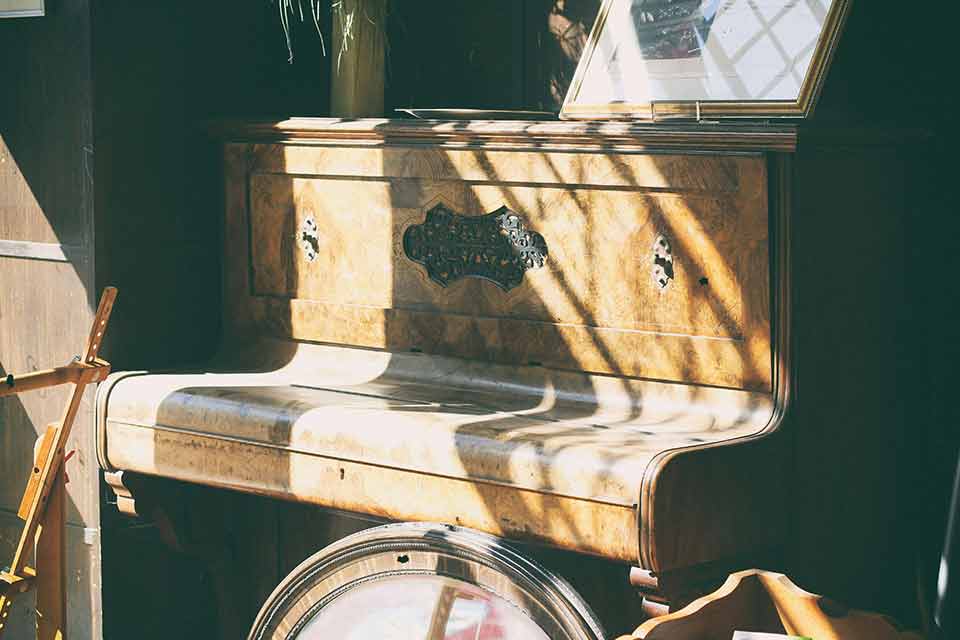
I stayed in this house, the house where my mother left me, just like she left the piano. I remember that wonderful time: there wasn’t any woodworm and she played and sang songs that I loved to listen to, even if I didn’t understand the words. She always told me I was French and that she’d teach me the language, but instead, one day she just said, “You have to follow your heart,” and she left. I was six years old, and up until then I thought she was my older sister—my beautiful sister—who let me watch her as she combed that beautiful, long, and lustrous hair, and she let me wear lipstick in secret. When she left, however, my family said she wasn’t my sister, that she’d gotten pregnant by a boyfriend, they didn’t know who, and that’s how I was born. I waited for her to return for a long time, playing the piano to remember her until one day my grandmother said, “That kid makes a lot of noise with that piano.” She made me put it inside the storage room, where I now sleep. They put too much stuff on top of it, though, and it eventually broke. Deep down, I feel like that’s what my grandfather wanted: to retaliate against my mother for abandoning us to “follow her heart.” I never understood how following your heart would work if it’s right there inside of you. I only kept one lipstick from her, the only one she forgot to bring with her. I waited until my uncles were gone to color my lips, looking at myself in the mirror as I looked for her in my eyes. She never appeared.
I kept going to school and eating in the kitchen with my grandmother like I did when my mother was home, but it was hard for me to pass sixth grade. I didn’t pay attention in class, and I was always punished for it. My grandfather said that he wouldn’t keep wasting money on someone who didn’t want to study, so he made me help one of my uncles: a master builder. That’s how I became a construction worker. And I liked earning my own money. Other workers spent it on beer or, for those with families, on clothes for their children. Instead, I bought lipsticks in a market stall where no one knew me, and I took them to the storage room, which, by then, was also my room. The lipstick my mother left ran out quickly from the many times I wore it as a child, but I kept the case. I carry it with me; I like to squeeze it sometimes, the little empty tube.
My grandfather died a few years back. I wasn’t at his funeral because I had gone to work on a construction project outside the city, and I’m glad. That way, I didn’t need to fake sadness. He never hit me or treated me wrong, but neither did he speak to me, and a few times I caught him watching me from afar as if I were weird. On a couple of occasions, and only when my uncles were unavailable, I accompanied my grandmother to leave flowers for him on the Day of the Dead.
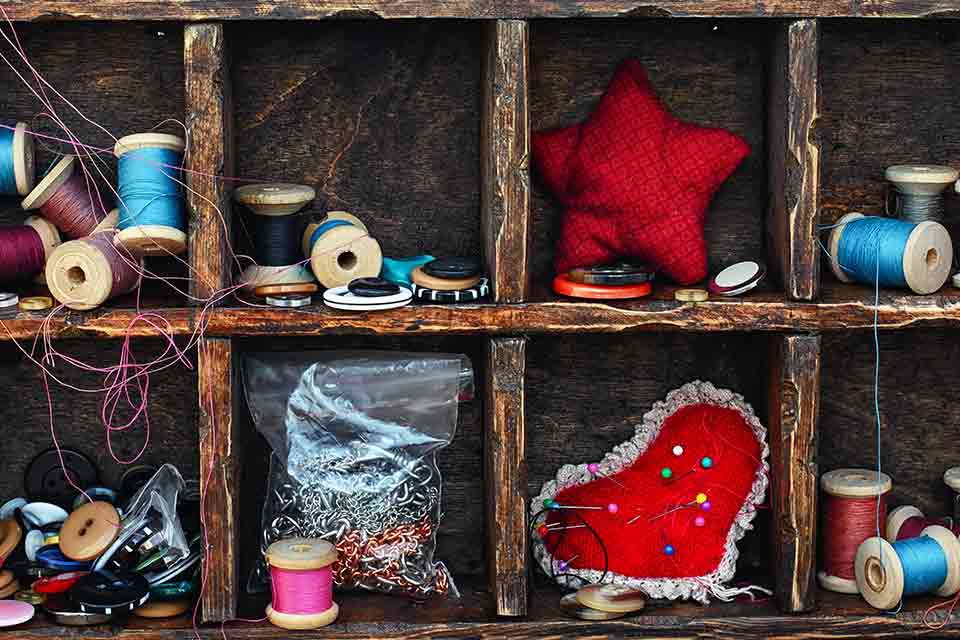
Grandma never spoke about my mother, not even when she was strong and healthy. No one spoke about her, only my uncles, who, when mad at me, remembered her with words that I didn’t understand but that bothered me. My grandmother started talking about her only after she got sick, complaining about how much they loved her and cared for her because she was the only girl, and how quick she was to leave and abandon me. I don’t like hearing bad talk about my mother, but I don’t say anything because I like sharing time with my grandmother when my uncles go off to work. Although the truth is, what I like is looking into her old seamstress things and even trying on some dresses that she keeps preserved in mothballs in an old wardrobe. For some reason, my grandmother doesn’t think this is strange. She even says, “Try this one on” or, “The color of the other one suits you better.”
Without her noticing, I took some of those dresses to my room-slash-storage, to try them on during the long hours when I have nothing to do. I don’t have a full-body mirror, though, only a small one over the sink that I installed myself, along with the shower and toilet. That’s what I chose to spend the money on, because at night, my uncles would close the door to the house, and I wouldn’t be able to use the bathroom. I could’ve bought myself a larger mirror, but I didn’t have the energy to explain why a man, a construction worker, needed a large mirror in his room. I’d rather see myself part by part, and I’ve realized that that’s who I am: a person made by the parts. Although I’m not sure if I’m that or if I’m multiple people in one single body. That thought unsettles me, so I scare the idea away like one swats off a fly.
I’ve realized that that’s who I am: a person made by the parts.
I’ve returned today to keep my grandmother company, but I’m not looking for more dresses—I’m looking for a red ribbon. I want a ribbon that matches my lipstick, maybe because I vaguely remember watching my mother use one on her hair when she let me keep her company while she got ready. There are many places to search in: the hallway that leads to the bedroom is crammed; a shelf covers the entire wall, with bookshelves full of dust and books that no one reads; there’s a full closet with a plant and a pile of disorganized boxes. Some are plastic, made for organizing, like those found in the houses of organized people; others are simple shoeboxes, reused to save things.
Although my fingers are thickened and calloused because of my work in construction, I manage to look, with care, through embroidered strips, old scraps of cloth, strings of sequins, lace, and buttons. There are a lot of ribbons: green, yellow, orange, pink, blue, but I can’t find the red one. I approach the sofa where my grandmother is sleeping with her mouth agape. I know she isn’t fully asleep because she occasionally complains. “Grandma,” I say. She doesn’t answer. “Grandma,” I repeat, a bit louder. She closes her mouth and opens her eyes halfway through. “Grandma,” I insist, “I’m looking for a red ribbon. Do you remember if you have one?”
Now I know she’s awake because she grabs me by the hand. Hers is cold, despite the summer heat, which is so strong it makes me nauseous. I give her time to return from whatever limbo she’s in, to let her recognize me and realize she is on her sofa, surrounded by pillows and covered in a blanket. “What?” she asks. “Do you have a red ribbon, Grandma? I need one.” She stays silent for a few seconds, looking through the holes in her mind. Unexpectedly, she opens her eyes wider and says in a voice clearer than usual: “Yes, look for it in the wooden box behind my bed.”
I know which box she’s referring to. It’s made out of carved wood, like that of a trunk, but smaller. I’ve watched it with curiosity since I was a kid, and I’d like to see what it holds, but it’s always been locked. Before I even ask her, my grandmother says, “The key is on the table, behind the Virgin.”
My grandmother has always been a fervent Catholic, and her room is full of images of saints, some in paintings and others in sculptures. When I was a kid, I was terrified of the painting of a man with a sullen face, like my grandfather’s, with sandals and a white dress, holding a scale, with people going up in flames at his feet. “It’s the Righteous Judge,” my grandmother would tell me. “Don’t be scared of him. Just behave so that when the final judgment comes, you don’t go to hell.” I didn’t understand why she’d tell me this; the only thing I had done wrong was being distracted in school. Every time I walked into the room, I made sure to look the opposite way because it seemed like the man from the painting was staring at me, and it gave me nightmares. The Virgins, on the other hand, are much more gentle. I like their dresses, which I imagine in soft fabric, nice to the touch. My grandmother has Our Lady of Guadalupe and Carmel, but I know that when she says “the Virgin” she means Suyapa, to whom she is most devoted.
I’m excited to finally open the box after so many years and see what’s inside. “Come back quickly,” my grandmother says, “I don’t like to be alone for long.” I hurry to the bedroom and find the key exactly where she said it would be. I clean the dust and put the key in the lock. It’s hard to twist it; I can tell it’s been a long time since she’s used it, but I finally manage to open it.
Surprisingly, the only thing inside the box is the red ribbon, the kind you would put in your hair. Somehow, I realize it’s the same one I remember seeing on my mother when I was a child and thought she was my beautiful sister.
I stand in front of the large mirror by the closet with the ribbon in my hands. I see myself as I am: a grown man, wearing pants with worn fabric and a T-shirt, my hands tanned. Since I’m not working, it’s been a long time since I’ve shaved or cut my hair. I like it, though. My hair is long enough to wear the ribbon. I grab my grandmother’s brush and comb it carefully. My hands are hard, but my hair is not. It’s soft and, I hope, like my mother’s. I’d like to resemble her, but I don’t know if I’ve managed yet, because I don’t have any photographs, and her face is increasingly distant in my memories.
After brushing my hair, I put on the ribbon and return to the living room so my grandmother won’t be alone for long. I assume she’s sleeping, so I try not to make too much noise. She’s awake, though, and I see she’s trying to get up. I come closer and grab her by the arms to help her, because she can’t do it alone, but she stares at me, scared, until she manages to sit up. I stay beside her on the sofa, in case she needs to go to the bathroom, and only then do I realize she’s crying. Tears run down her sunken cheeks and gather in the grooves of her nose and mouth. It’s me who’s scared now. “What’s wrong, Grandma? Does something hurt?” She shakes her head to say no, and she raises her hand to touch the ribbon in my hair. I’m not sure if she wants to remove it or if it’s the gesture she usually makes to cross me, but I move so that she can reach my head.
“It was hers,” she starts to say, and I struggle to understand her because of the tears. “That was the ribbon she was wearing when it happened.” I don’t ask her who she is referring to because I know it’s my mother, who floats by in my memory again, with her beautiful hair. But I want my grandmother to calm down because she’s very agitated. “Don’t cry, Grandma,” I tell her. “Can I bring you some water?” “Let me . . .” she says. “Let me speak because now I remember.”
I don’t know what she remembered that made her cry when she can hardly remember the day of the week, but I follow her instructions and wait for her in silence. And so she begins speaking, and then nothing can stop her.
And so she begins speaking, and then nothing can stop her.
“Your mother didn’t get pregnant by a boyfriend,” she says, “Nothing like what your uncles say. Even what I’ve said is a lie. I didn’t want to remember. I couldn’t. She wasn’t a bad daughter; she was beautiful and smart. She got good grades in school. It was an expensive school, too, but that’s where she got piano and French lessons. Your grandfather spoiled her and paid for everything.”
She stops crying and is silent for a moment. I think of offering her water again, but I choose to stay silent. Now she speaks in a stronger voice and has a different expression, as if the terrible pain she has had all this time suddenly ceased. “I didn’t want to see it,” she says. “I didn’t want to see anything. Because I had to have cared for her, and I didn’t. Your grandfather slept with your uncles because, since I got pregnant with your mother, the youngest, he said I disgusted him. One morning, I got up to go to the bathroom and saw that the door to your mother’s room was open. I went to close it, thinking it had been the wind, and I saw it. I saw everything because the lights from the street shone right through the window. Your grandfather was on the bed, lying over your mother. She wasn’t moving. Her eyes were open, but I could tell she wasn’t seeing anything. And she was wearing that red ribbon in her hair.”
My eyes were open, but I wasn’t seeing anything, like my grandmother remembers my mother that day.
My eyes were open, but I wasn’t seeing anything, like my grandmother remembers my mother that day. I hear her voice from afar, not because I’m weak but because I’ve gone elsewhere, and I listen to her from there. “I didn’t do or say anything,” my grandmother continues. “I went back to my room and went on with my life. I made myself forget what I had seen. When your mother’s belly started growing, I knew it was your grandfather’s. The three of us knew, but none of us said anything. Your grandfather pulled her from school. When the time came, we took her to the hospital and you were born. I never looked out for her. I kept that ribbon under lock to never have to think of her again. Your grandfather was your grandfather, and he was also your father. Both of us, your grandfather and I, ruined your mother’s life. My girl.”
Finally, she stopped talking. I don’t say anything. I don’t try to console her, and she doesn’t ask for it either. She lies down again, and I know that this time, she won’t wake up from her half-sleep, her haven. I realize she can’t die because she’s been dead for a long time. I feel compassion for that empty body, like the furniture, devoured from within by sarcoma, like the lipstick case I always carry in the pocket of my jeans. I finally understand what following the heart means. My heart says that I remove the ribbon, put it around my grandmother’s neck, and cinch it until her faint breathing pattern stops.
How can you not follow your heart?
Translation from the Spanish